Insider Risk Management: Where Social Media Screening Fits


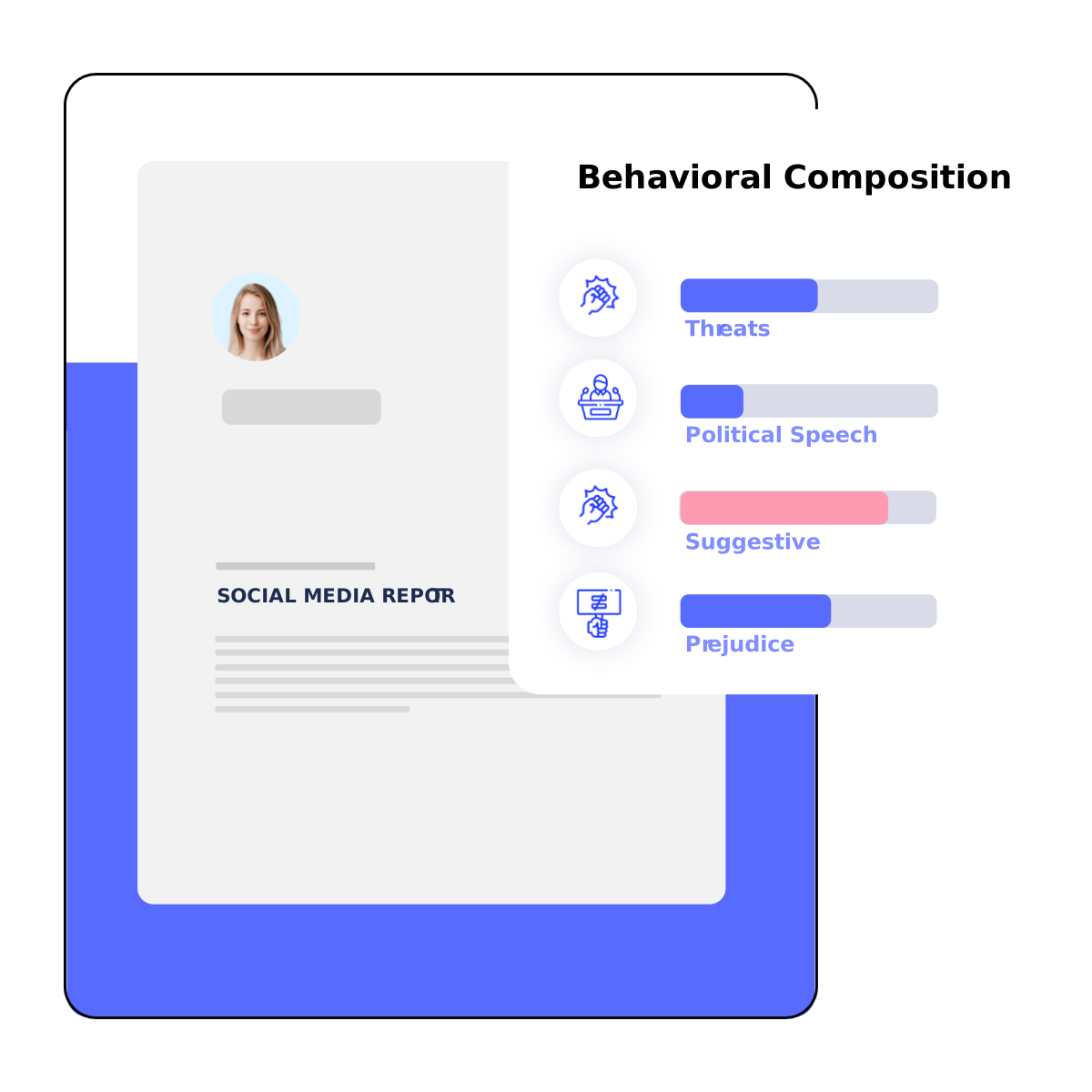
Short answer: Insider risk management is the practice of identifying and reducing harm that can come from people inside an organization—employees, contractors, and others with trusted access. Most programs watch what happens inside company systems. Social media screening adds a view of publicly visible behavior outside them: threats, violent or extremist content, harassment, and disclosure of confidential information. Done properly, it uses public content only, removes protected-class information, and returns findings for the organization to weigh.
What insider risk management covers
Insider risk is broader than data theft. A mature program typically considers fraud, theft of intellectual property or confidential data, sabotage, workplace violence, and harassment—harm that can come from someone who already has access, whether the intent is malicious or not.
Programs are usually cross-functional. Security, HR, legal, and compliance share ownership, because the signals and the responses span all four. The goal is early awareness and proportionate response, not surveillance of everyone.
The blind spot: behavior outside company systems
Technical controls—access management, data loss prevention, activity logging—see what a person does on company systems. They don't see what a person says and shares publicly outside them.
Yet some of the clearest early indicators show up in public: explicit threats toward coworkers or leaders, glorification of violence, extremist symbols, harassment of colleagues, or posts that expose confidential company information. Courts have also begun to expect employers to act on public conduct that bears on the workplace, even when it happens off-duty. Our legal Q&A on social media screening covers one such Ninth Circuit case.
Where social media screening fits in the program
Social media screening supports insider risk management at three points:
- Pre-hire baseline. Screening before access is granted surfaces public conduct that's relevant to the role. See our complete guide to social media background checks.
- Continuous monitoring or periodic re-screening for sensitive roles. Risk changes after hire. Monitoring or re-screening people in safety-sensitive, high-access, or public-facing roles keeps the picture current without watching everyone.
- Structured review during an investigation. When a concern is raised, a documented review of public content can inform the investigation, with counsel involved where the purpose or timing is unclear.
In each case, the output is an input to the program—findings to be weighed by the people responsible, alongside everything else they know.
The guardrails that keep it defensible
Screening current employees raises the same legal questions as pre-hire screening, plus a few more. A defensible approach holds to these:
- Public content only. No passwords, no private-account access. Many states restrict requesting either. See what state password laws actually say.
- Protected-class information removed. Religion, health, union affiliation, and other protected characteristics should be redacted before a reviewer sees the file.
- Protected activity left alone. Employees discussing pay or working conditions with one another may be engaging in legally protected activity. That is not a risk signal.
- Lawful off-duty conduct respected. Some states protect lawful off-duty activity, including political activity. Categories should focus on conduct like threats, violence, and harassment, not viewpoints.
- The background-check framework followed. When a third party screens for employment purposes, disclosure, authorization, and adverse action steps apply. Our FCRA overview for employers explains them.
- Role-based and proportionate. Define which roles are monitored or re-screened, how often, and why—and document it.
- Decisions stay with the organization. The provider supplies categorized findings, not conclusions.
For more on the legal side of reviewing current employees, see how employers can legally monitor employees' social media.
Connecting to related risk programs
Insider risk rarely stands alone. The same public-behavior signals feed workplace violence prevention plans, reduce negligent hiring exposure, and support supervision obligations in regulated industries such as financial services—see our FINRA Rule 3110 overview.
Where Ferretly fits
Ferretly is an AI-powered social media screening platform that pairs machine analysis with human analyst review. It reviews publicly available activity across major social platforms, news, forums, and the open web, analyzes text and images in 50+ languages, and applies 13 behavioral risk classifications, including threats, prejudice, disparaging speech, and weapons imagery. Video analysis is available as an optional add-on. Organizations can use Ferretly for pre-employment screening, continuous monitoring, and investigations. Ferretly returns findings and categorizations; the decision stays with the organization.
Book a demo to see how it fits into your insider risk program.
FAQ
What is insider risk management?
The practice of identifying and reducing harm that can come from people with trusted access to an organization, including fraud, data theft, sabotage, workplace violence, and harassment.
How is insider risk different from insider threat?
Insider threat usually refers to a specific person or act that could cause harm. Insider risk is the broader, program-level view of the potential for harm across the workforce, whether intentional or not.
Can employers review current employees' social media?
Reviewing publicly available content is broadly permitted, with conditions: no private-account access, protected-class information kept out of decisions, protected activity left alone, and the standard background-check process followed when a third party is involved.
Should every employee be monitored?
Usually not. A proportionate program defines which roles warrant continuous monitoring or periodic re-screening—typically safety-sensitive, high-access, or public-facing positions—and documents why.
This article is for general informational purposes only and is not legal advice. Laws vary by jurisdiction and change over time. Consult qualified counsel for guidance specific to your situation.