FCRA Compliance for Employers: A Plain-English 2026 Overview


Short answer: When employers use third-party background checks, the Fair Credit Reporting Act (FCRA) frames the process around five general areas: a permissible purpose, clear disclosure and written authorization, a two-step adverse action process, report accuracy, and secure disposal. This overview explains each in plain English to help you orient your own process and your conversations with counsel.
The FCRA governs how employers use background checks—called "consumer reports" when a third party prepares them. It's also a frequent source of background-check litigation, usually over the same avoidable points. This guide walks through each area in the order it tends to come up in a real hiring workflow. It's general education, not legal advice—use it to ask better questions, then confirm specifics with qualified counsel.
The five areas, in order
1. Permissible purpose
A consumer report should only be obtained for a purpose the FCRA permits. For hiring, that purpose is employment—evaluating a candidate or employee. Pulling a report for an unrelated reason, or on someone who hasn't entered your process, falls outside that purpose. It's the foundation everything else builds on.
2. Disclosure and authorization
Before a background check is ordered, two things generally happen. First, disclosure: the applicant receives a clear, standalone notice that a consumer report may be obtained for employment purposes. "Standalone" matters—a frequent source of disputes is burying the disclosure inside a job application or padding it with extra language. Second, authorization: the applicant provides written permission before the report is ordered.
This is one of the most-litigated areas in practice. A clean, standalone disclosure and a separate signed authorization, reviewed by counsel and used consistently, is the straightforward fix.
3. The adverse action process (two steps)
If an employer is considering not hiring someone—or another adverse action—because of something in the report, the FCRA contemplates a two-step process.
Step one—pre-adverse action. Before acting, the employer provides a copy of the report relied on and a copy of the federal "Summary of Your Rights Under the Fair Credit Reporting Act," then allows a reasonable period for the person to review and dispute inaccuracies.
Step two—adverse action. After that period, if the employer proceeds, it provides a final adverse action notice. This typically includes notice that the action was taken, the contact information of the agency that supplied the report, a statement that the agency didn't make the decision, and notice of the person's right to dispute the report and obtain a free copy.
A generic notice that omits required elements is a common and avoidable problem. The fix is a complete, consistent notice every time—again, confirmed with counsel.
4. Accuracy
The report an employer acts on should be accurate and reasonably current. Practically, that means working with a provider that maintains reasonable accuracy procedures, honoring the dispute process, and not relying on stale information. If a candidate disputes a finding, that dispute should be resolved before the finding is treated as final.
5. Secure disposal
Consumer report data should be disposed of securely when no longer needed, so it can't be reconstructed. A documented disposal practice closes the loop.
Where social media screening fits
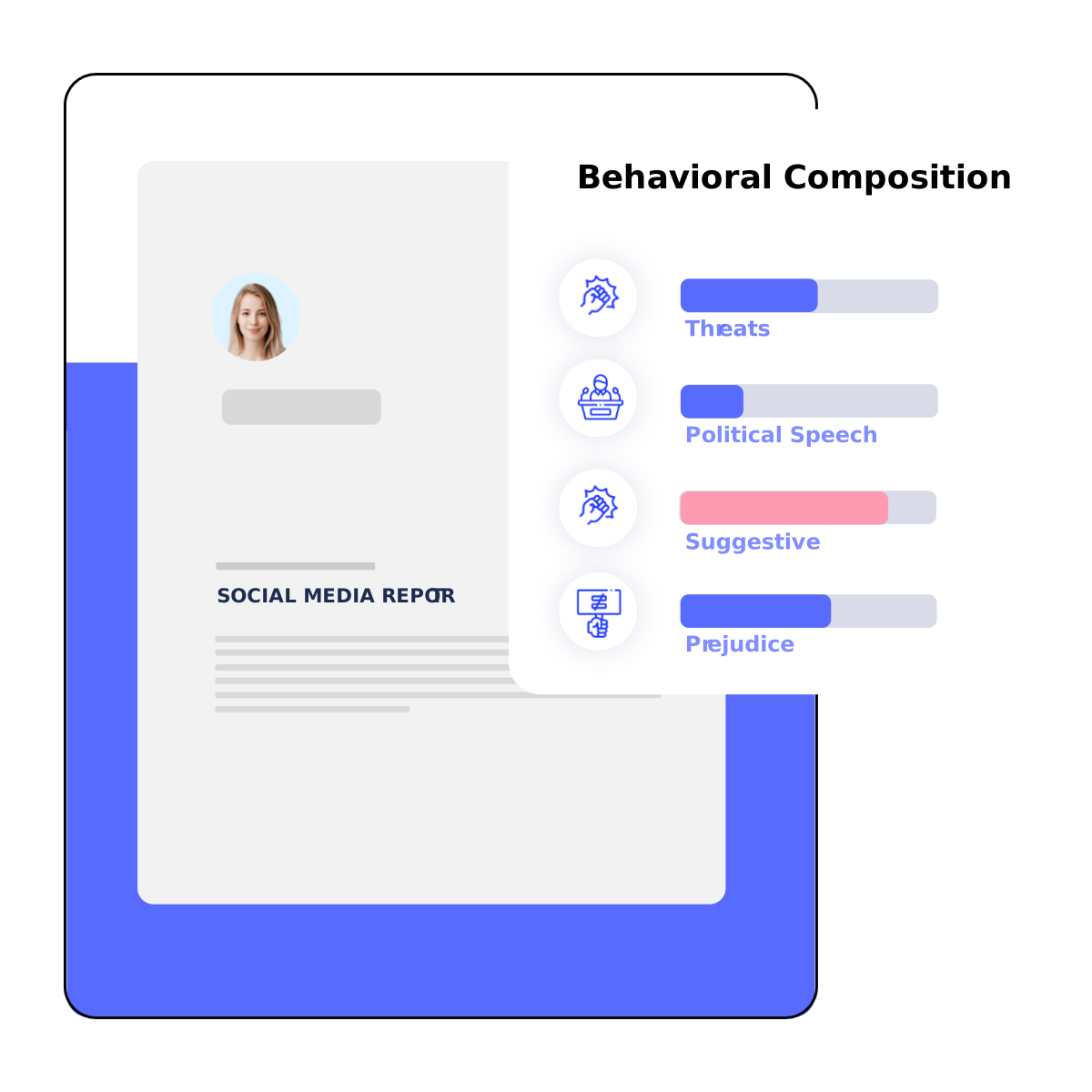
When a third party screens social media for employment purposes, the resulting report is generally a consumer report—so the same five areas apply to it as to a criminal check. A careful social media screening process layers on two additional practices:
- Protected-class redaction. Protected-class indicators are removed before any decision-maker sees the file, which addresses the concern that early exposure to that information invites discrimination claims.
- Findings and categorization, not decisions. The provider reports categorized, public-content findings; the employer makes the call.
Done this way, social media screening fits the same framework as any other background check.
A general workflow, end to end
- Confirm an employment purpose.
- Provide a clean, standalone disclosure; obtain separate written authorization.
- Order the report from a provider with reasonable accuracy procedures.
- If considering adverse action: send the pre-adverse notice with the report and Summary of Rights.
- Allow a reasonable period for the candidate to respond.
- If proceeding: send a complete adverse action notice.
- Resolve any dispute before treating a finding as final.
- Dispose of report data securely.
Run a consistent loop and confirm the specifics with counsel, and you've covered the areas the FCRA is concerned with.
FAQ
What is FCRA compliance for employers?In general terms, it's handling third-party background checks consistently with the Fair Credit Reporting Act: an employment purpose, standalone disclosure and written authorization, the adverse action process, report accuracy, and secure disposal.
What are the steps of the FCRA adverse action process?Generally two. First, before acting, send a pre-adverse notice with the report and the Summary of Rights, then allow a reasonable period. Second, after that period, send a final adverse action notice with the required information.
Does the disclosure have to be a separate document?As a general practice, yes—a clear, standalone disclosure is the safer approach, and a frequent source of disputes is combining it with other materials. Confirm specifics with counsel.
Is social media screening covered by the FCRA?Generally yes, when a third party conducts it for employment purposes. The same framework applies, plus protected-class redaction as a best practice.
This article is for general informational purposes only and is not legal advice. FCRA requirements are detailed and fact-specific. Consult qualified counsel and official sources (such as the FTC and CFPB) before making compliance decisions.