Negligent Hiring: An Employer Liability Guide (2026)


Short answer: Negligent hiring is a legal claim that can hold an employer liable when it hires someone it knew—or should have known through reasonable care—was unfit for the role, and that person then causes foreseeable harm. The practical defense is documentation: a reasonable, consistent screening process that shows due care was exercised.
Negligent hiring is the liability many employers underestimate until a large verdict makes the news. It generally doesn't require that an employer did something malicious—only that reasonable care would have surfaced a risk it didn't take. This guide covers what the claim is, the elements courts generally consider, why awards have grown, and the documented process that supports a defense.
What negligent hiring means
Negligent hiring is a theory of employer liability. If a business knew, or through reasonable care should have known, that an employee was unfit or dangerous for a position—and that employee then causes foreseeable harm to a coworker, customer, or member of the public—the employer may be held responsible for the resulting damages.
It sits in a family of related claims:
- Negligent hiring — failure to exercise reasonable care at the point of hire.
- Negligent retention — keeping an employee after the employer knew, or should have known, they posed a risk.
- Negligent supervision — failure to adequately oversee an employee's conduct on the job.
Large cases often allege all three together. The common thread is foreseeability: a jury asks whether a reasonable employer, exercising reasonable care, would have caught the risk. Retention and supervision risks are why many organizations extend screening beyond hiring into an insider risk management program.
The elements courts generally consider
The exact formulation varies by state, but negligent hiring claims generally turn on a few core elements:
- Duty. The employer owed a duty of care—typically, not to place an unfit person in a role where they could foreseeably harm others.
- Knowledge. The employee was unfit or dangerous for the role, and reasonable care would have revealed it.
- Breach. The employer failed to exercise reasonable care in hiring or retention.
- Causation and damages. The failure was a proximate cause of an actual injury.
The "should have known" standard is where screening lives. A court measures it against what a reasonable employer would have done—and a documented screening process is the evidence that the standard was met.
Why verdicts have grown
Over the past decade, negligent hiring and related claims have produced some of the largest jury awards in employment litigation—reaching well into the tens and hundreds of millions of dollars, and in rare, widely reported cases far higher before later reductions. The pattern across the most-cited cases is consistent: information that a reasonable screening process would have surfaced, that the employer didn't act on, in a role where harm was foreseeable.
The cost is also not only the verdict. Even when an employer prevails, this litigation is expensive—legal fees, discovery, business disruption, and reputational damage that outlasts the case. The asymmetry is the point: a documented screening process costs a fraction of one negligent hiring defense.
How documented screening supports a defense
The legal standard is "reasonable care," and reasonableness is demonstrated through a consistent, documented process. A defensible program generally includes:
- A consistent process applied to comparable roles. Screening some candidates and not others undermines the reasonableness story. Consistency is itself evidence of care.
- Role-appropriate depth. A role with access to customers' homes, vulnerable populations, or safety-sensitive functions warrants deeper screening than a back-office role. Match the depth to the foreseeable risk.
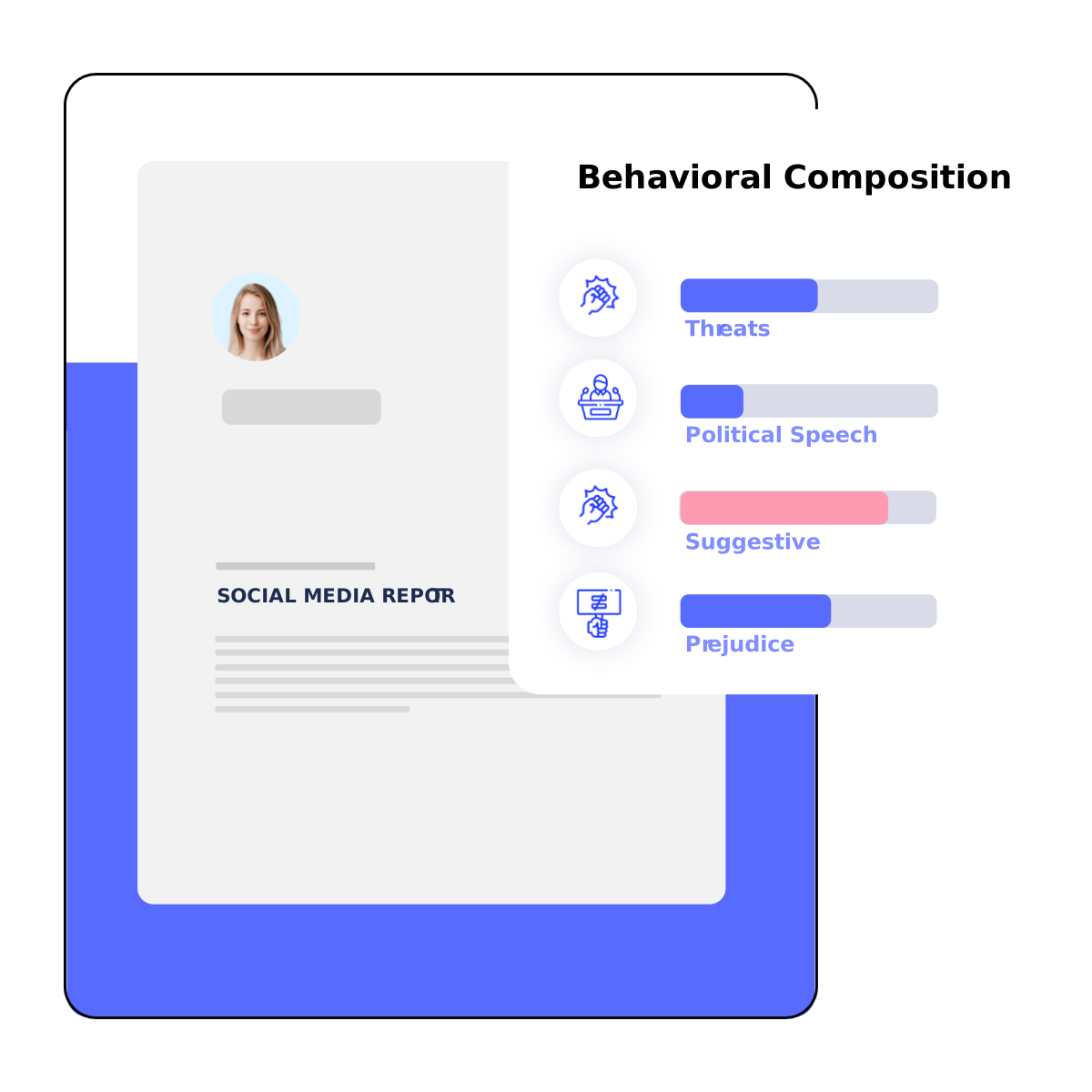
- Behavioral risk visibility, not just criminal history. A criminal check surfaces adjudicated history. It doesn't capture documented patterns of violent, threatening, or harassing conduct that may appear in public content. Compliant social media screening—public content only, with protected-class redaction and human-adjudicated findings—adds that visibility. Our complete guide to social media background checks explains how it works.
- Consistent, lawful handling. Disclosure, authorization, and a documented process, so the screening that supports your defense doesn't create separate exposure. See our plain-English FCRA overview for employers.
- An audit trail. The record that shows what was checked, when, and how it was acted on. In litigation, the audit trail is the defense.
The goal isn't to predict every bad outcome—no process can. It's to be able to show, with documentation, that reasonable care was exercised.
The bottom line
Negligent hiring liability tends to reward the employer who looked and acted reasonably, and to punish the one who didn't look at all. The cases that make headlines almost always involve information a reasonable screening process would have surfaced. A consistent, documented screening program—covering criminal history and behavioral risk in public content—is both the risk-reduction tool and, if a claim ever comes, the evidence that a duty of care was met.
FAQ
What is negligent hiring?
A legal claim that can hold an employer liable when it hires someone it knew or should have known was unfit, and that person foreseeably harms another. The core question is whether reasonable care would have surfaced the risk.
What are the elements of a negligent hiring claim?
Generally a duty of care, knowledge (actual or constructive) of unfitness, a breach of that duty, and causation of actual damages. The exact formulation varies by state.
What's the difference between negligent hiring and negligent retention?
Negligent hiring is failure to exercise reasonable care at the point of hire. Negligent retention is keeping an employee after the employer knew, or should have known, they posed a risk.
Can a background check prevent negligent hiring claims?
It can't prevent a claim from being filed, but a documented, reasonable screening process is the primary evidence that an employer exercised due care.
How does social media screening relate to negligent hiring?
Criminal checks surface adjudicated history; they don't capture documented patterns of violent or threatening conduct in public content. Compliant, public-content social media screening adds behavioral visibility to the duty-of-care record.
Related reading
- Workplace violence prevention plans: what they include and why
- Insider risk management: where social media screening fits
- Is social media screening legal? What employers need to know
Book a demo to see a sample Ferretly report.
This article is for general informational purposes only and is not legal advice. Negligent hiring law varies by state and turns on specific facts. Consult qualified counsel for guidance on your situation.