Best Background Check Companies WITH Social Media Screening (2026)
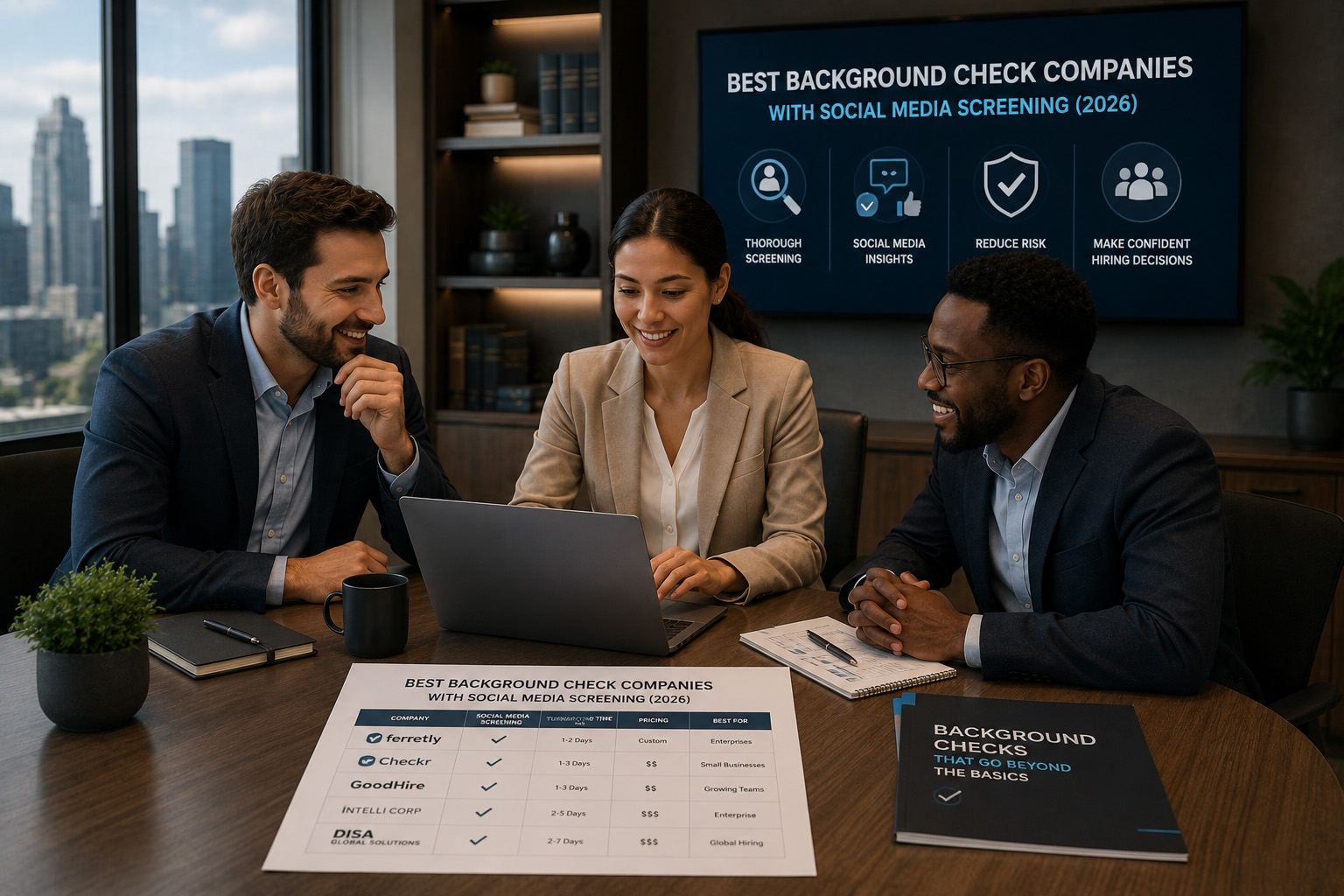

Short answer: Many background check companies offer social media screening only as a shallow add-on—a keyword scan or a manual spot-check bolted onto a criminal report. A smaller set treat it as a core capability built around behavioral categorization, protected-class redaction, and human-adjudicated findings. This guide gives you the criteria to tell them apart.
"Best background check companies" is a crowded, contested search term, and most of the listicles are written by the vendors themselves. So we'll do something more useful: define the sub-category that matters to risk-aware employers—social media screening done properly—and give you the criteria to evaluate any provider on the list, including ours.
Why "social media screening" means very different things by vendor
Two vendors can both claim social media screening and deliver completely different products. The gap usually shows up in five places:
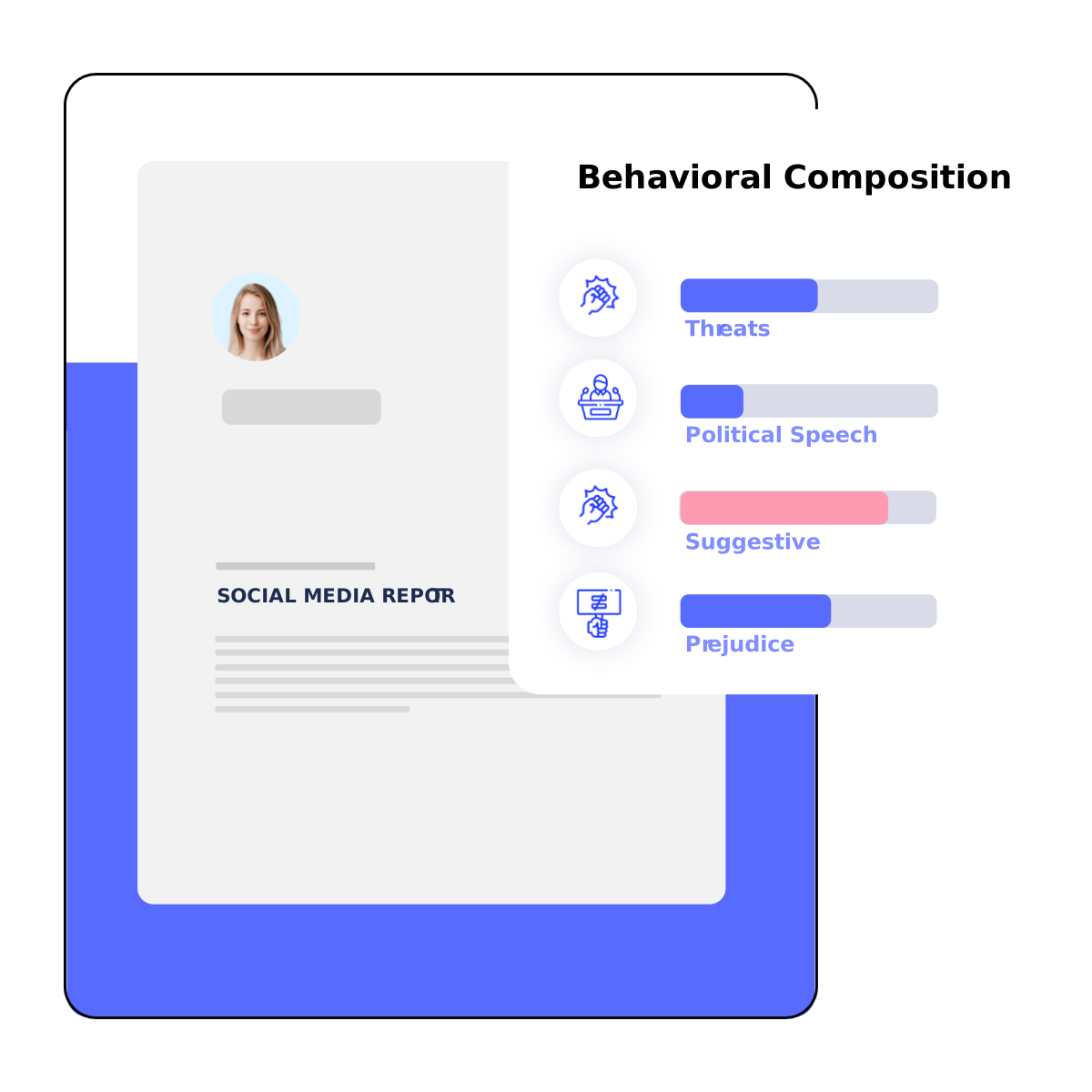
- Depth of analysis. A keyword flag is not analysis. Real screening categorizes behavior—violent content, harassment, illegal activity, and similar—rather than returning raw hits for someone to interpret.
- Protected-class redaction. Does the process remove protected-class indicators before a decision-maker sees the file? Without it, the employer is looking at exactly the information that creates risk.
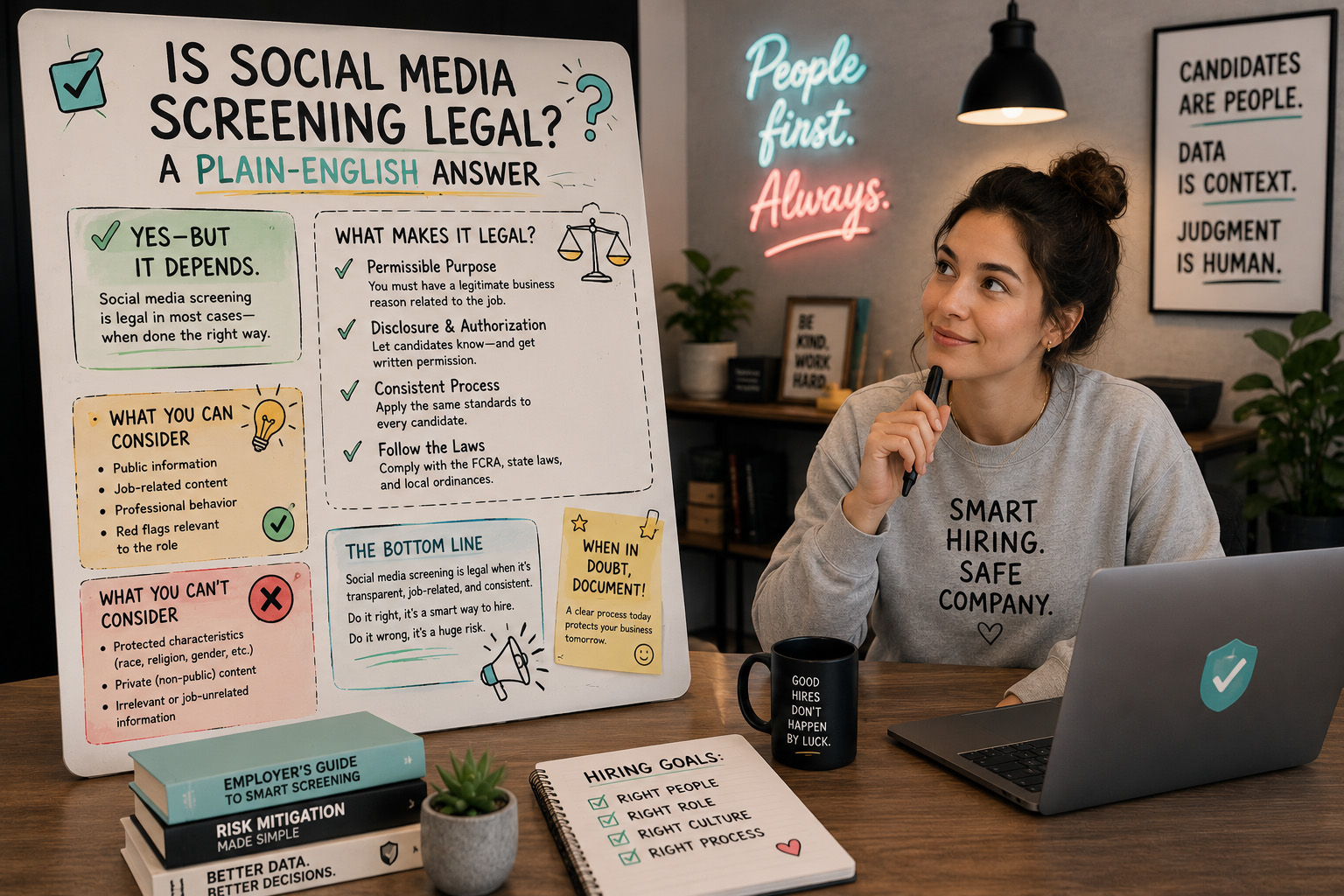
- Public-content discipline. Compliant screening uses publicly available content only—no credential requests, no private-account access.
- Documented handling. A consistent, recorded process is what makes the output defensible.
- Human adjudication. The output should be findings and categorizations for the employer to weigh—not an automated decision.
A vendor that nails all five is doing social media screening. A vendor that returns a keyword list is selling a checkbox.
The buyer's checklist
Use this to evaluate any provider:
- Behavioral categorization, not keyword dumps. Findings should map to defined categories you can stand behind.
- Pre-decision protected-class redaction. Built into the workflow, not a manual step someone might forget.
- Public-content-only sourcing. No passwords, no private accounts.
- Language coverage. A single-language scan misses risk in multilingual workforces. Ask what languages the provider actually analyzes.
- Human-adjudicated output. A person reviews categorized findings; the system doesn't make the hire/no-hire call.
- Auditability. Every finding should trace back to a public source and a documented category.
The provider landscape in 2026
The market splits roughly into three groups.
The enterprise giants. The largest traditional background check firms—the names that dominate criminal and employment verification—generally offer social media screening as a secondary add-on. It's available, but it's rarely the core of what they do, and depth, redaction, and language coverage vary. If you're already with one of them, the question is how their social product works against the checklist above.
Generalist platforms. A wave of HR-tech and screening platforms offer fast, self-service checks with social media as an optional module. Good for speed; the variable is depth and rigor. Run the checklist.
Specialist social media screening providers. A smaller group treats social media as the core capability rather than the add-on—built around behavioral categorization, redaction, and documented handling from the ground up. This is the sub-category where depth lives.
Where Ferretly fits
Ferretly is a specialist by design. It's an AI-powered digital risk intelligence platform—paired with human adjudication and protected-class redaction—that integrates global sanctions screening, behavioral analysis, video intelligence, and identity resolution into a single workflow. Social media screening isn't a checkbox on a criminal report; it's the core product.
Against the checklist: behavioral categorization across defined risk classifications, drawn from publicly available content; protected-class redaction applied before findings reach a decision-maker; documented, audit-ready handling with the decision left to the employer; and broad language coverage for multilingual workforces—a gap most add-on products leave open.
The honest framing: if you need a one-stop criminal-plus-employment verification vendor and social is a minor concern, the giants are built for that. If social media risk is a real part of your exposure—safety-sensitive roles, public-facing staff, multilingual teams—a specialist gives you depth the add-ons don't.
How to choose
Match the provider to your actual risk, not to the longest feature list:
- Social as a minor add-on → an enterprise giant or a generalist platform, evaluated on the checklist.
- Social media risk is material → a specialist built around behavioral categorization and redaction.
- Multilingual workforce → prioritize real, audited language coverage.
- Compliance-sensitive → demand documented redaction and consistent handling before anything else.
The bottom line
"Best background check company" is the wrong question if social media risk is on your radar. The right question is which provider does social media screening as a defensible discipline—categorization, redaction, language depth, and human adjudication—rather than as a keyword scan stapled to a criminal report. Hold every vendor to the same checklist. The list gets short fast.
FAQ
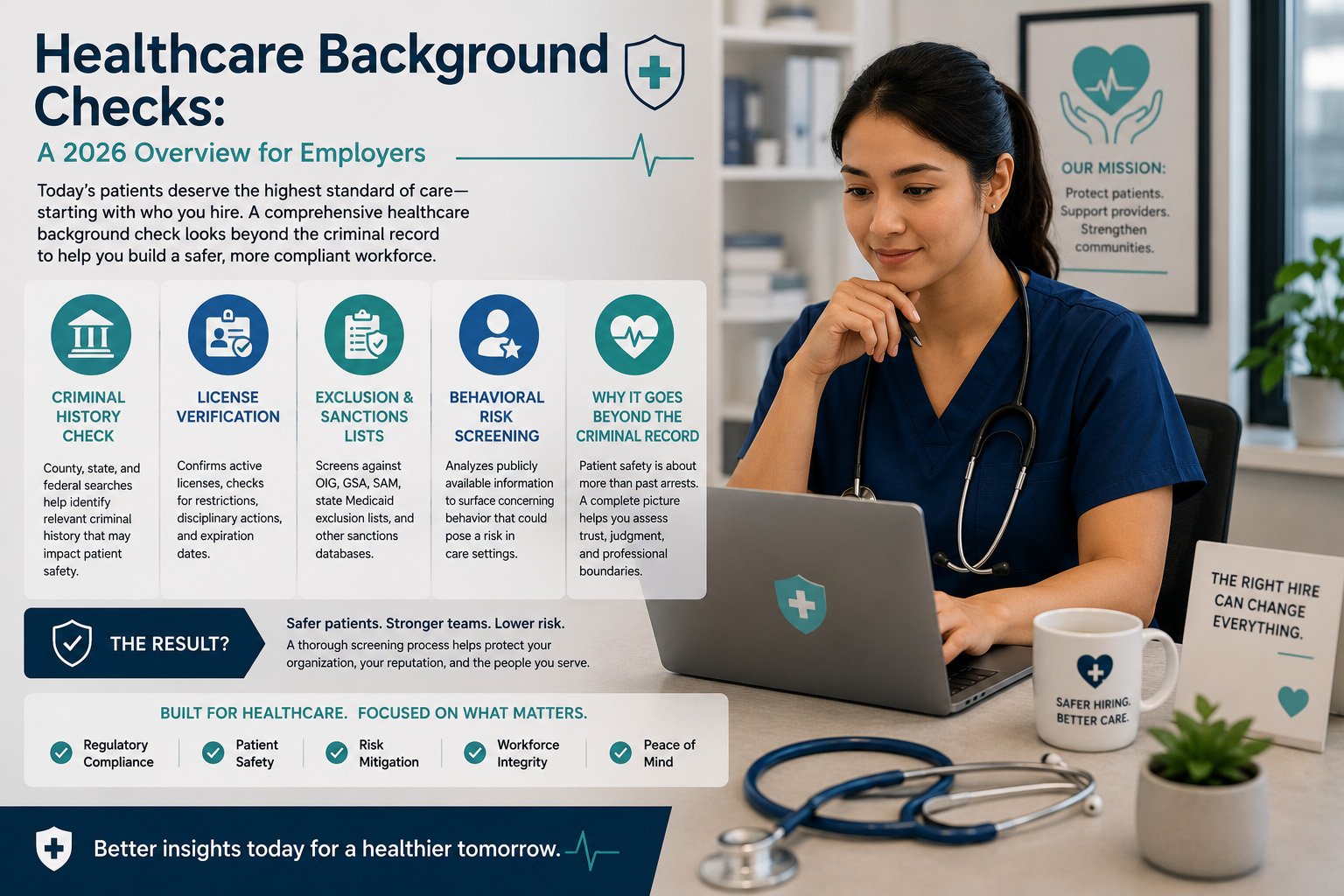
Which background check companies offer social media screening?Many providers offer some form of it, but depth varies enormously—from keyword scans to full behavioral categorization with protected-class redaction. The differentiator is how the screening works, not whether it's offered.
Is social media screening included in a standard background check?Usually not. It's typically a separate add-on or a specialist product. A standard background check covers criminal and employment history; social media screening is a distinct capability.
What separates a strong social media screening provider from a weak one?Behavioral categorization instead of keyword dumps, protected-class redaction before review, public-content-only sourcing, human adjudication, and a documented audit trail.
Can social media screening be biased?It can be, if a decision-maker sees protected-class information. A careful process redacts those indicators before findings reach the employer and categorizes only job-relevant conduct.
This article is for general informational purposes only and is not legal advice. Evaluate any provider against your own requirements and consult qualified counsel where appropriate.