Tech Industry: Navigating Social Media Screening Challenges


Navigating highly regulated spaces within the tech industry such as social media background screening
Navigating the tech industry's regulatory landscape is no small feat. Social media background screening is a growing trend, offering insights into candidates' online behavior. Yet, it presents unique challenges.
Data privacy laws like GDPR and CCPA add layers of complexity. Compliance is crucial to avoid reputational risks and legal pitfalls. Ethical considerations must guide every step of the screening process.
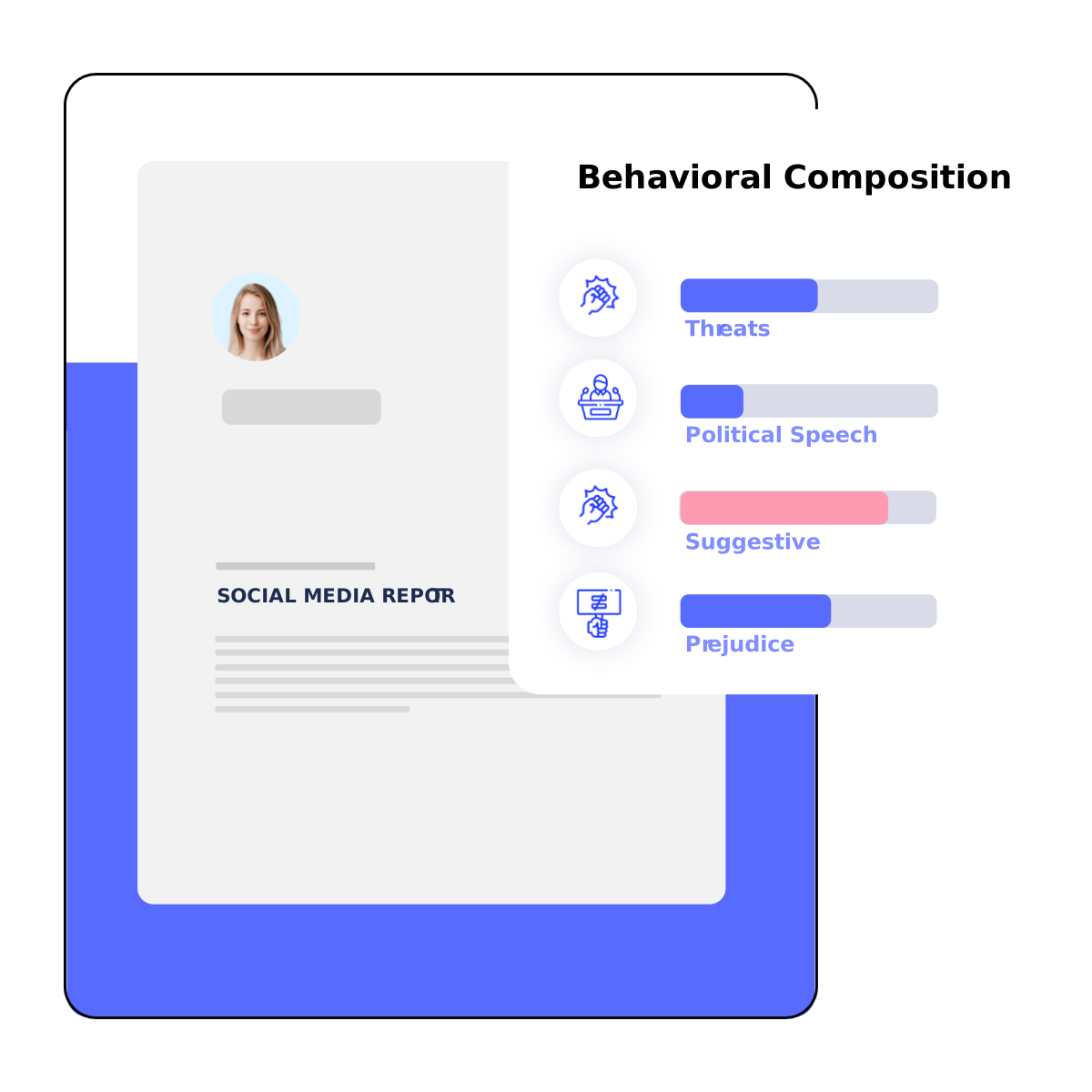
Organizations need a balanced approach to manage digital risks effectively. This involves integrating technology with human oversight. The goal is to protect privacy while ensuring fair treatment. Modern platforms are moving beyond manual review, using technology-assisted analysis of publicly available data combined with human oversight to ensure consistency and compliance.
Human Resources, Compliance, and Data Privacy teams play pivotal roles. They must collaborate to develop robust frameworks. These frameworks should align with legal standards and ethical norms.
In this article, we explore strategies for navigating these challenges. We aim to provide insights for professionals managing reputational risks in the digital age.
The Rise of Social Media Background Screening in Tech
Social media background screening has become integral in the tech industry. Companies seek a fuller picture of potential hires. Platforms like LinkedIn and Twitter offer valuable insights.
This trend has grown because of increased online presence. Social media can reveal traits not evident in résumés. Companies utilize this data to gauge fit and predict behavior.
Advantages of social media screening include:
- Access to diverse candidate information.
- Insights into candidates’ communication skills.
- Uncovering potential red flags.
However, this practice is not without challenges. Ethical concerns about privacy and bias arise frequently. Misinterpretation of social media content remains a risk.
Firms must navigate these challenges carefully. They should prioritize transparency and consent. This ensures candidates are aware and informed about the process.
As firms embrace this trend, balancing access and privacy becomes crucial. Ethical application preserves trust and upholds organizational integrity.
Regulatory Landscape: Laws and Compliance Challenges
Navigating the regulatory landscape is crucial for organizations using social media background screening. Various laws govern data privacy to protect individuals' rights. The GDPR in Europe and CCPA in California are prime examples.
These regulations require stringent adherence to transparency and consent. Violations can lead to severe penalties, impacting reputations and finances. Therefore, companies must integrate compliance into their screening practices.
Key compliance challenges include:
- Keeping up with evolving regulations.
- Ensuring data is used ethically.
- Maintaining transparency and accuracy.
Organizations often find it difficult to interpret varied local and global laws. This complexity can hinder effective compliance. Ensuring staff understand these regulations is essential for successful implementation.
Moreover, collaboration between legal and HR teams can enhance compliance efforts. Regular audits and assessments of processes can further mitigate risks. By doing so, companies strengthen their reputational risk management.
Ultimately, a robust compliance framework is vital for managing digital risks. With careful planning and execution, firms can foster trust and protect their standing in the tech landscape.
Balancing Privacy, Ethics, and Risk in Online Background Checks
The delicate interplay between privacy, ethics, and risk management is central in online background checks. Organizations must tread carefully to avoid overstepping boundaries. Understanding and respecting privacy rights is crucial.
Ethical considerations should not be underestimated. Screening processes might unintentionally lead to biased decisions. Therefore, crafting ethical guidelines is necessary to maintain fairness. Transparency with candidates is also key.
Organizations must address potential risks by:
- Seeking explicit consent from individuals.
- Ensuring data accuracy and relevance.
- Implementing protocols to avoid discrimination.
Striking a balance involves weighing the need for information with privacy rights. It requires a well-defined framework that guides decision-making. This balance ensures that the data harnessed is used responsibly.
Human oversight plays a critical role in mitigating risks. While technology aids in data collection, human judgment is indispensable. This blend of tech and touch offers a nuanced approach.
Thus, achieving equilibrium in social media screening means prioritizing ethics and privacy. By doing so, firms foster trust and uphold their integrity in an increasingly digital world.
Building a Responsible Screening Framework
Developing a robust screening framework is essential for managing digital risks. This framework should align with both regulatory standards and ethical norms. It's a blueprint for how screening is conducted.
Firstly, organizations should define clear guidelines on permissible data usage. This helps set boundaries and expectations. It ensures that only relevant information is assessed.
Incorporating transparency into the framework is vital. Candidates should know what to expect from the screening process. This transparency can cultivate trust and reduce legal risks.
The framework should include:
- Clearly defined data collection processes.
- Protocols for ensuring data accuracy and relevance.
- Procedures for regular audits and updates.
Collaboration across departments strengthens the framework. Involvement from legal, HR, and compliance teams ensures comprehensiveness. This cooperation helps identify potential blind spots.
Finally, regular training should be embedded within the framework. Keeping staff updated on best practices encourages responsible behavior. It fosters a culture of continuous improvement in managing digital risks.
The Role of Technology: AI, Automation, and Human Oversight
Technology plays an integral role in social media background screening. AI and automation streamline processes and enhance efficiency. Yet, they must be carefully managed to prevent ethical issues.
AI tools can quickly analyze vast amounts of data. They identify patterns that would take humans much longer to find. However, these tools should not operate without oversight.
Human oversight remains crucial. It ensures that automated decisions are fair and contextually accurate. Machines may struggle with nuanced interpretation.
For effective implementation:
- Combine AI insights with human judgment.
- Establish guidelines for AI use.
- Regularly review AI system outcomes for bias.
Balanced integration of technology and human input is key. It optimizes efficiency while maintaining ethical integrity. This synergy can empower organizations to handle digital risks responsibly.
By leveraging technology thoughtfully, organizations can improve screening processes. They can manage reputational risks with greater precision and care.
Best Practices for HR, Compliance, and Privacy Teams
For HR, compliance, and privacy teams, understanding best practices is essential. Each team must operate cohesively to address the complexities of social media screening. Clear communication and defined roles are crucial.
HR professionals should focus on transparency with candidates. It's vital to communicate screening processes clearly. Candidates should understand what data is being assessed.
Compliance teams must ensure frameworks align with regulations. Constant monitoring of evolving laws helps avoid violations. Regular training ensures teams stay informed and prepared.
Data Privacy Officers need to champion ethical data use. Policies should reflect both legal compliance and ethical considerations. This dual focus helps maintain trust and integrity.
Key strategies include:
- Establishing clear screening guidelines.
- Ensuring candidate consent before screenings.
- Maintaining accurate and up-to-date records.
Collaboration between all teams is vital. It aids in mitigating risks and enhancing data handling practices. Teams can better manage digital risks and protect the organization's reputation by working together.
Recommendations for effective collaboration:
- Conduct joint strategy sessions regularly.
- Develop shared goals for risk management.
- Foster an open culture for information sharing.
Conclusion: Future-Proofing Reputation Management in a Digital Age
In today's digital world, organizations must adapt to rapidly changing landscapes. Effective reputation management is not just desirable; it is essential. It ensures organizations stay ahead of potential risks and maintain their credibility.
Building robust frameworks and processes helps in navigating these complexities. By focusing on compliance, privacy, and ethics, organizations can safeguard their reputations. This focus is vital for maintaining trust with clients and stakeholders.
As technology evolves, so must our approaches. Embracing innovation with caution and foresight will enable organizations to thrive. By prioritizing transparency and ethical practices, they can protect their reputation and future-proof their operations in the digital age.