Safeguarding Classroom Trust in the Digital Age


Social media has become a reflection of who we are — not just personally, but also professionally. While most schools already perform background checks, recent incidents show these measures can miss what matters most. In Maryland, a Baltimore teacher allegedly supported ICE raids on the school he worked at, offering to help them identify students through social media (Twitter). In another case, a Texas middle schoolteacher was fired after a video was revealed of him telling his students that he is a racist.
Both incidents reveal how quickly trust can be lost when harmful beliefs publicly surface, whether through social media statements or in-class conduct. Even when standard screenings are in place, reputational and ethical risks continue to appear. In the education sector, these risks can directly affect the trust between teachers, students, and the communities they serve.
School Screenings Already Exist, So Why Do Issues Still Happen?
Nearly every district and institution verifies standardized items from potential candidates, often involving:
• Professional licenses & certifications
• Education background
• Criminal records
• Employment history
However, traditional background checks usually stop at surface-level data. They don't catch underlying signals tied to behavior that can negatively shape how educators interact with students. These include:
• Online/social media conduct
• Extremist language and views
• Patterns of intolerance and violence
• Alcohol & drug content
• Disparaging speech
When bias and extremism find their way into the classroom, it creates a sense of discomfort and stains students' views on learning environments being built on trust and inclusivity.The incidents listed above aren't isolated cases; all across the US, schools are increasingly facing reputational and legal fallout from educators' online activity that would have been visible through responsible social media screenings.
The Real Cost of Overlooking Social Media
When schools fail to evaluate online behavior they're risking bad press, but more importantly lawsuits, student safety, and public trust. In other industries, ignoring this has already proven costly. Organizations that skip social media screenings often face preventable scandals and financial consequences, sometimes running into the millions.
Education systems are no different than these other industries. In fact, school districts are actually held to higher standards than most other organizations due to their direct influence on young minds. Therefore, neglecting digital due diligence isn't just a policy gap, but rather an ethical one.
The Wrong Fix: Silencing Staff Instead of Screening Smarter
Some districts have reacted by restricting classroom discussion of politics or social issues altogether. This response completely misses the point; there is heavy value in students learning and being aware about the world they live in.
The problem isn't staff engaging with social topics — it's when personal ideologies cross the line into bias or intolerance in educational spaces and curriculums. Banning discussion limits learning; thorough candidate screening helps ensure that those conversations will stay responsible.
How AI Can Help Schools Screen Fairly and Ethically
Social media screening services enhanced with artificial intelligence (AI) like Ferretly have the potential to make the hiring process more objective and transparent. When designed responsibly, these systems don't flag a person's identity or ideologies. Instead, they can be trained to identify an individual's patterns of behavior that could pose a risk to schools they are employed at.
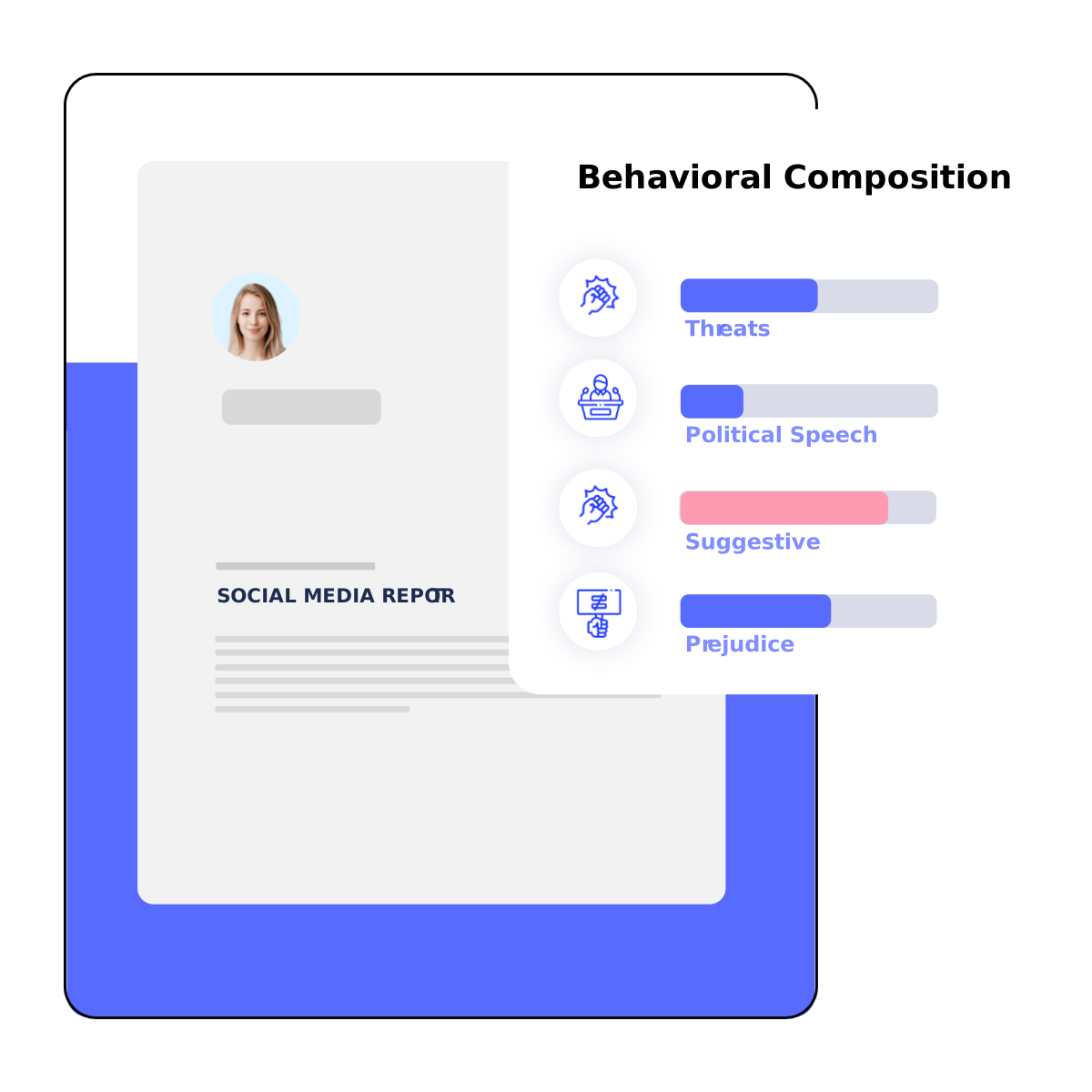
The most effective models operate on clear, standardized criteria, such as flags for harmful speech, threats, or violent content. Schools can opt in to flags for certain indicators like disparaging speech, while choosing not to include flags regarding political bias or legal activities.
Using human-centered automation gives organizations greater control over both the data and the tools their systems interact with. This helps reduce the risk of external biases creeping into results, since the screening process is contained within a transparent environment.
Ultimately, ethical AI screening isn't about punishing beliefs — it's about ensuring conduct aligns with the responsibilities of educators. When applied with human oversight, AI can help schools balance fairness, safety, and open discourse in the classroom.
Wake Up Call for Educational Leaders
It's time for schools to takescreening seriously—not just as a formality, but as a foundation for safety and trust. Teachers hold enormous influence over the next generation. They shapehow students think, question, and connect with the world. Social mediascreening should include indicators of extremism, dangerous activities, andonline hostility; not to censor, but to ensure professionalism.
No student should feel as though they can't trust those who are there to help with learning and support.Regardless of background, students deserve educators who model critical thinking, not division.
AI is a tool that can help standardize and reveal some of the behavioral signals, but it should never replace human judgment. Administrative staff have a responsibility to be part of the line of defense, done through reviewing the generated results with fairness and context to see the full person behind the profile.
When technology and human oversight work together, screening can become both ethical and effective.Protecting students isn't about restricting ideas, but about ensuring that the people guiding them do so with care and accountability.
###
About This Article
This piece was developed as part of a University of Maryland writing practicum exploring AI ethics, responsible AI-assisted content creation, and advanced prompting techniques. The course was led by Adam Lloyd, Ph.D., with industry mentorship provided by Ferretly to ground coursework in real-world application and ethical AI use.
Student Author: Grace Liao
→gliao9@terpmail.umd.edu · LinkedIn
Course Faculty & Mentorship
Adam Lloyd, Ph.D. · Lecturer, University of Maryland
Adam teaches business and technical writing with a focus on real-world application—his courses partner with companies to create actual workplace deliverables. He co-created UMD's "Digital Rhetoric at the Dawn ofExtra-Human Discourse," exploring AI's role in academic, creative, and professional writing. A former journalist, startup founder, and award-honored educator, he holds advanced degrees in English, philosophy, and national security studies.
→lloyda@umd.edu · LinkedIn
Nicole Young · VP, Growth Marketing
Nicole provides industry mentorship for this course, bringing deep experience in growth marketing, advertising strategy, and AI-integrated content systems. Her work focuses on building ethical, scalable marketing programs at the intersection of technology, trust, and brand performance. She welcomes collaboration with academic programs seeking practitioner partnerships.
→nicole@ferretly.com · LinkedIn