AI Advancements and the Future of Government Vetting


In today's connected world, public trust is the foundation of every government agency. Citizens expect those who serve them to uphold integrity, fairness, and professionalism, both in the workplace and beyond. However, maintaining that trust has become increasingly complex in the digital age.
Traditional background checks remain necessary, but they can no longer capture the full picture of an individual's behavior or values. While these checks confirm past actions, they fail to reflect how individuals conduct themselves online in the present.
Gaps in Traditional Vetting Systems
This disconnect between traditional vetting processes and modern digital behavior poses serious risks for government agencies. Vetting is meant to determine whether individuals are suitable for federal employment or contracts by examining their background, character, and reliability. Yet, many existing systems are outdated and inconsistent.
For example, in 2018, Government Executive reported that the Department of Veterans Affairs failed to complete mandatory background checks for thousands of medical employees. This lapse left patients and staff vulnerable and raised concerns about the reliability of federal screening systems. When agencies struggle to perform even basic checks, it becomes clear that current vetting methods are insufficient for identifying deeper behavioral risks.
Data Inaccuracies and Their Consequences
Even when background checks are conducted, they often rely on flawed or incomplete data. According to the Open Society Foundations, the FBI's background check system contains significant inaccuracies, including missing or incorrect records. These errors have serious consequences:
• Qualified candidates may lose employment opportunities
• Agencies may make decisions based on unreliable information
• Behavioral risks such as online extremism or harassment remain undetected
When vetting tools fail at this level, they cannot effectively assess more nuanced risks that can threaten public trust.
The Role of AI in Modern Government Screening
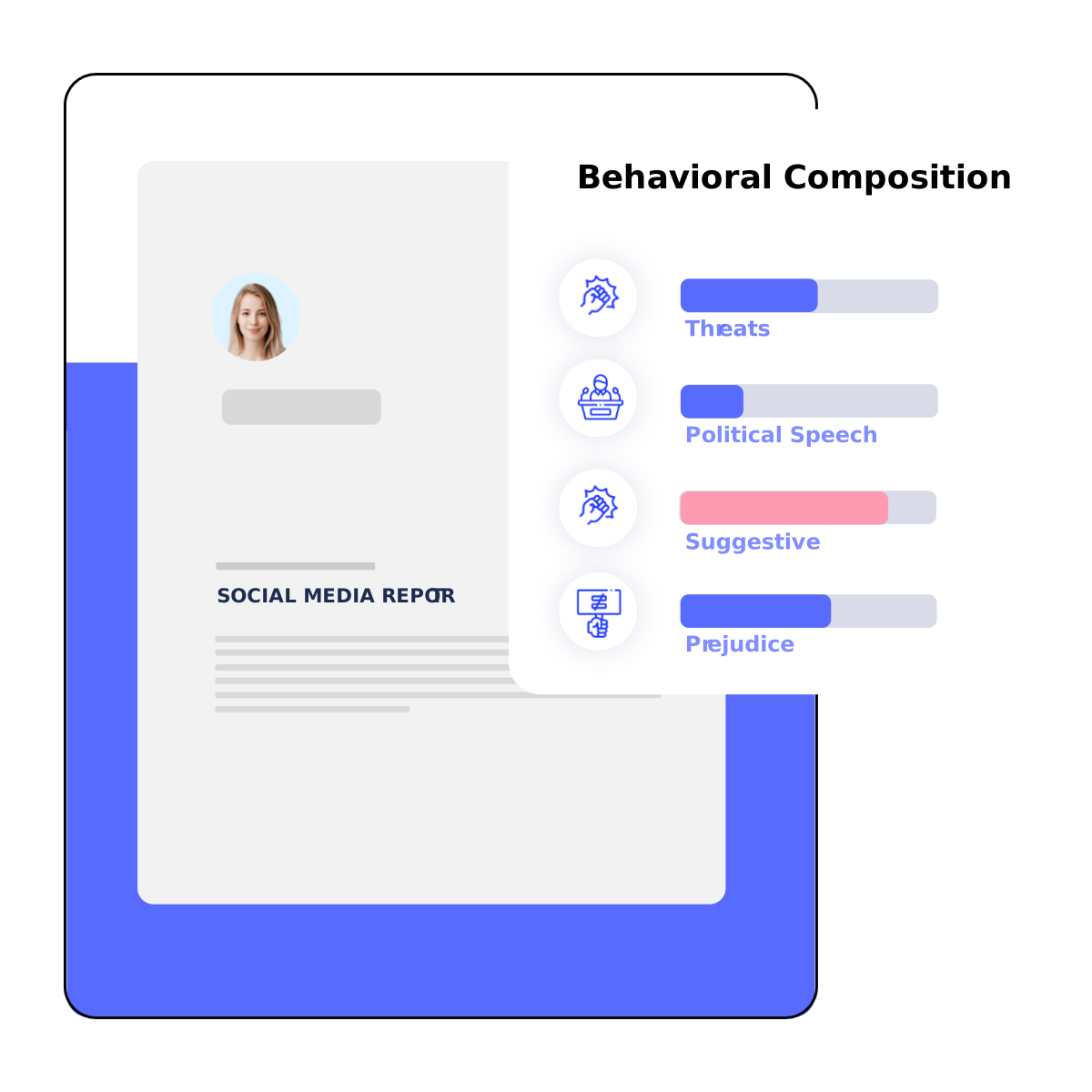
AI-powered tools like Ferretly help close this gap by enhancing, rather than replacing, traditional background checks. Ferretly analyzes an individual's digital footprint to identify behavioral risk signals that standard systems often overlook. These signals may include:
• Discriminatory or hateful language
• Threats or harassment
• Indicators of substance abuse
• Patterns of hostile or unethical online behavior
Importantly, Ferretly operates in compliance with Fair Credit Reporting Act (FCRA) and Equal EmploymentOpportunity Commission (EEOC) guidelines, ensuring that screenings remain lawful and fair.
Protecting Public Trust Through Digital Insight
For government agencies, an employee's online behavior can quickly become a reflection of the institution itself. A single post or comment can damage an agency's credibility and undermine public confidence. By incorporating AI-driven social media screening into the vetting process, agencies can identify warning signs early and reduce the likelihood of reputational crises.
This approach shifts organizations from reactive responses to proactive prevention. Instead of addressing misconduct after it becomes public, agencies can detect risks earlier and protect both employees and the communities they serve.
Ethical Oversight and Human-Centered Automation
With the use of AI comes the responsibility to apply it ethically. Ferretly emphasizes human-centered automation, meaning that AI-generated insights are always reviewed by trained professionals. This ensures:
• Context is considered before decisions are made
• Automated bias is minimized
• Transparency and accountability remain central to the process
The goal is not surveillance, but smarter, more responsible decision-making that balances efficiency with fairness.
The Future of Government Vetting
As digital behavior continues to blur the line between personal and professional life, government agencies must redefine what it means to be fit for duty. Expanding vetting practices to include behavioral risk intelligence allows agencies to build a more complete and accurate picture of candidates.
Ultimately, trust in government cannot be assumed, it must be verified. By adopting AI-powered screening tools that work alongside human judgment, agencies can modernize their vetting processes, protect their reputation, and reinforce the public trust they are built on.
###
About This Article
This piece was developed as part of a University of Maryland writing practicum exploring AI ethics, responsible AI-assisted content creation, and advanced prompting techniques. The course was led by Adam Lloyd, Ph.D., with industry mentorship provided by Ferretly to ground coursework in real-world application and ethical AI use.
Student Author: Andrew Mai
→jitdrew@terpmail.umd.edu · LinkedIn
Course Faculty & Mentorship
Adam Lloyd, Ph.D. · Lecturer, University of Maryland
Adam teaches business and technical writing with a focus on real-world application—his courses partner with companies to create actual workplace deliverables. He co-created UMD's "Digital Rhetoric at the Dawn ofExtra-Human Discourse," exploring AI's role in academic, creative, and professional writing. A former journalist, startup founder, and award-honored educator, he holds advanced degrees in English, philosophy, and national security studies.
→lloyda@umd.edu · LinkedIn
Nicole Young · VP, Growth Marketing
Nicole provides industry mentorship for this course, bringing deep experience in growth marketing, advertising strategy, and AI-integrated content systems. Her work focuses on building ethical, scalable marketing programs at the intersection of technology, trust, and brand performance. She welcomes collaboration with academic programs seeking practitioner partnerships.
→nicole@ferretly.com · LinkedIn