Trust in Executive Searches: Importance of Social Media Screening


In today's competitive job market, executive searches demand precision and insight. Recruiters and HR leaders must ensure they make informed decisions. Trust and confidence are paramount in these high-stakes processes. Traditional resumes often lack the depth needed to fully assess a candidate's suitability.
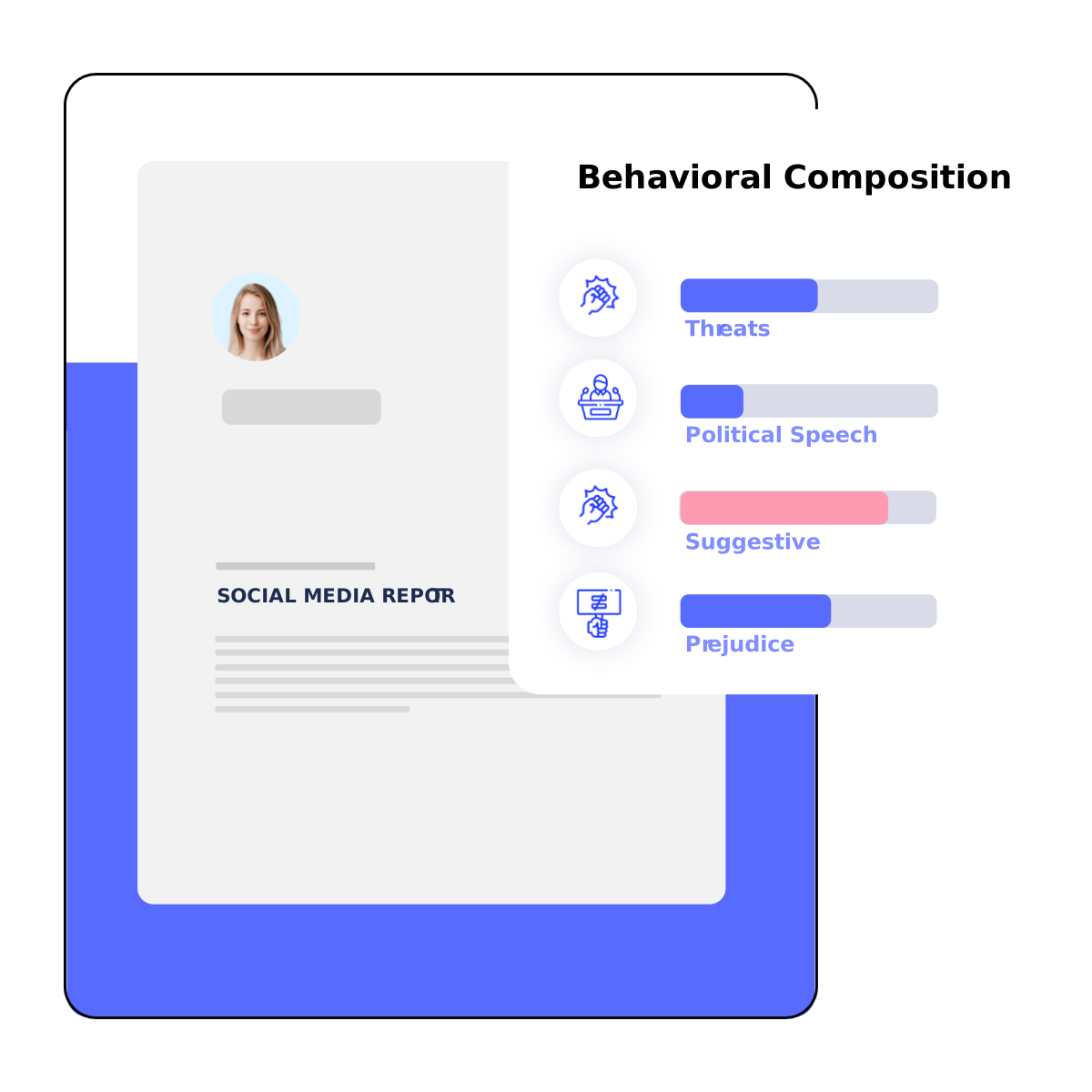
Social media background screening emerges as a vital tool in this context. It offers a broader view of a candidate's public persona. This approach helps identify potential red flags that might not appear in interviews.
Balancing privacy and ethics is crucial in this process. Recruiters must navigate these waters carefully to maintain compliance and integrity. By integrating social media screening, organizations can enhance their hiring practices and build trust.
The Evolving Landscape of Executive Search: Trust and Confidence at Stake
The landscape of executive search is changing rapidly. Digital transformation is influencing traditional recruitment methods. Trust and confidence are now more critical than ever before.
Hiring errors are costly, especially in executive roles. They can damage a company’s reputation and disrupt operations. Thus, organizations seek methods to increase accuracy in hiring decisions.
Here are key challenges facing recruiters:
- Rapidly evolving digital footprints
- Increased demand for leadership transparency
- Growing emphasis on company culture fit
Social media screening plays a crucial role in addressing these challenges. It provides insights beyond a candidate's resume. By leveraging this tool, recruiters can ensure a reliable and informed selection process.
Beyond the Resume: The Value of Social Media Screening
Resumes have long been the cornerstone of candidate evaluation. However, they offer only a snapshot of a candidate's qualifications and experience. Social media screening adds depth to this snapshot.
A candidate's digital presence reveals a broader view of their professional persona. It highlights achievements, skills, and even values. These insights are crucial when considering an executive role.
Here’s what social media can reveal:
- Communication style and network
- Leadership potential and industry influence
- Cultural alignment with your organization
Moreover, social media screening can unearth potential red flags. These might include inappropriate conduct or inconsistencies with declared information. Identifying such issues early helps mitigate risks.
Social media screening should complement, not replace, other assessment tools. This holistic approach enables more informed hiring decisions. By doing so, recruiters build a foundation of trust and confidence in their executive searches.
Balancing Privacy, Ethics, and Compliance in Social Media Screening
Social media screening raises essential questions about privacy and ethics. It’s crucial to approach this process with sensitivity and responsibility.
Balancing these concerns demands strict compliance with data protection laws. Understanding legal boundaries helps avoid privacy infringements. Ethical screening respects both candidate privacy and organizational interests.
Consider these key points:
- Transparent communication with candidates
- Clear policy outlining screening scope and limitations
- Ensuring compliance with relevant regulations
Avoiding overreach and bias is vital for ethical screening. Transparency builds trust between candidates and organizations. Informing candidates about screening processes upholds ethical standards.
Organizations must incorporate human oversight. Machines lack context; humans provide judgment. This oversight ensures more accurate, unbiased evaluations. Regularly update screening policies to align with current legal and ethical norms.
By adhering to these principles, organizations safeguard privacy while effectively assessing candidates, ensuring both ethical integrity and legal compliance.
Building a Structured and Defensible Screening Process
Incorporating social media screening effectively requires a structured approach. It's not merely about scanning profiles but following a defensible process.
Clarity in methodology enhances defensibility. Recruiters must establish concrete guidelines outlining what constitutes relevant information.
Key elements of a structured process include:
- Defined Objectives: Clearly outline what you seek to assess.
- Standard Procedures: Create a consistent approach to screening.
- Documentation: Maintain records of findings and decisions.
Each step should be transparent and justifiable. Documentation not only ensures accountability but also supports transparency.
Transparent processes mitigate legal risks. They provide clear reasoning for decisions made. This approach builds confidence among stakeholders.
A picture of structured process development illustrates these points.
by Walls.io (https://unsplash.com/@walls_io)
By upholding these standards, organizations foster trust while minimizing reputational risks. This structured approach underpins effective executive searches.
Human Oversight: Context, Nuance, and Avoiding Bias
Human oversight is crucial when conducting social media screenings. Technology can flag content, but it lacks the ability to interpret nuances.
Understanding context prevents misinterpretation. A single post doesn't define a candidate's character, and human analysis is essential to avoid jumping to conclusions.
Bias is a significant concern in social media screening. Machines might not differentiate sarcasm from sincerity, leading to skewed evaluations without human judgment.
Human reviewers bring necessary context and experience. They ensure that the insights drawn from social media are accurate and fair, balancing potential technological shortcomings with thoughtful analysis. Through careful oversight, the process becomes more ethical and just, enhancing decision quality.
Enhancing Organizational Reputation and Mitigating Risk
Social media screening strengthens organizational reputation by supporting responsible hiring. It ensures candidates align with the company’s ethos.
Identifying potential issues early on reduces future risks. This proactive approach protects against reputational damage.
A robust process also reassures stakeholders. Knowing that due diligence is performed can increase trust in leadership decisions.
To effectively mitigate risk, consider these elements:
- Consistent screening policies
- Transparent communication with candidates
- Regular updates to align with laws
These measures collectively enhance trust and mitigate reputational risks, reflecting a company dedicated to ethical practices.
by Vitaly Gariev (https://unsplash.com/@silverkblack)
Best Practices for Recruiters and HR Leaders
Recruiters and HR leaders should adopt best practices for effective social media screening. This approach ensures ethical and legal compliance.
Firstly, define clear policies outlining what will be screened. This clarity helps avoid ambiguity and overreach.
Incorporating human oversight is crucial. Machines assist, but human judgment interprets nuanced contexts accurately.
Furthermore, transparency with candidates matters. Inform them about the social media screening to build trust.
Consider these best practices:
- Develop a training program on ethical screening
- Document every step for accountability
- Regularly evaluate and update screening protocols
By implementing these practices, recruiters and HR leaders can bolster confidence in their executive search processes.
Conclusion: Social Media Screening as a Pillar of Trust in Executive Search
Incorporating social media screening is indispensable in the modern executive search process. It offers valuable insights beyond traditional resumes and interviews. This screening builds trust and confidence in hiring choices.
To maintain ethical standards, balancing privacy and compliance is essential. A well-structured process respects candidate rights while delivering vital information.
Ultimately, integrating social media screening fosters a holistic view of candidates. It assists recruiters and HR leaders in making informed, responsible decisions. By embracing this tool, organizations enhance both their reputation and the integrity of their hiring process.