What HR Must Understand Before 2026

Introduction: AI Has Changed the Hiring Landscape—Quietly
There’s a silent revolution unfolding beneath the surface of hiring:
AI systems now shape how people present themselves online, how digital identities are formed, and how risk appears or hides in public spaces.
Public digital behavior is no longer just content.
It’s signal.
But the way that signal is created, manipulated, and interpreted has fundamentally changed due to:
- generative media
- synthetic identity blending
- AI-driven content automation
- hyper fast virality
- reputational distortion
- democratized influence
And HR teams aren’t prepared.
This article breaks down how AI is altering identity, behavior, perception, and trust — and what HR, legal, and security leaders must understand before 2026.
1. AI Has Redefined Identity Itself
We’ve entered an era where an individual’s online presence is:
- partially authentic
- partially aspirational
- partially algorithmic
- increasingly synthetic
There are three layers of digital identity now:
Layer 1: Authentic Identity
What a person expresses intentionally.
Layer 2: Algorithmic Identity
What platforms amplify, distort, or suppress about them.
Layer 3: Synthetic Identity
Content created:
- by AI
- with AI
- for AI consumption
- or about a person without their involvement at all
This has massive implications for HR, because public digital behavior now contains both signal and synthetic noise.
2. Synthetic Noise Is the New Reputation Risk
AI-generated posts, comments, screenshots, or videos can:
- impersonate employees
- mimic their voice
- exploit their likeness
- falsely attribute behavior
- create digital frames of misconduct
This means HR teams must prepare for:
- identity impersonation
- synthetic harassment
- false attributions
- manipulated “evidence”
The employer risk landscape has expanded from “What did a candidate post?” to:
“What does the internet claim they did — and is any of it real?”
3. Why Context Is Now More Valuable Than Content
Because AI can now generate:
- inflammatory comments
- doctored videos
- manufactured screenshots
- synthetic harassment trails
…the content itself is no longer the whole story.
Context is everything.
HR teams must learn to ask:
- Was this actually posted by the candidate?
- Is this account verified as theirs?
- Could this be synthetic impersonation?
- Is the content manipulated?
- Does this have relevance to workplace safety?
This is why identity verification and analyst review are non-negotiable in 2026.
4. The Rise of Public Behavior as a Trust Signal
Despite the noise, one fact remains:
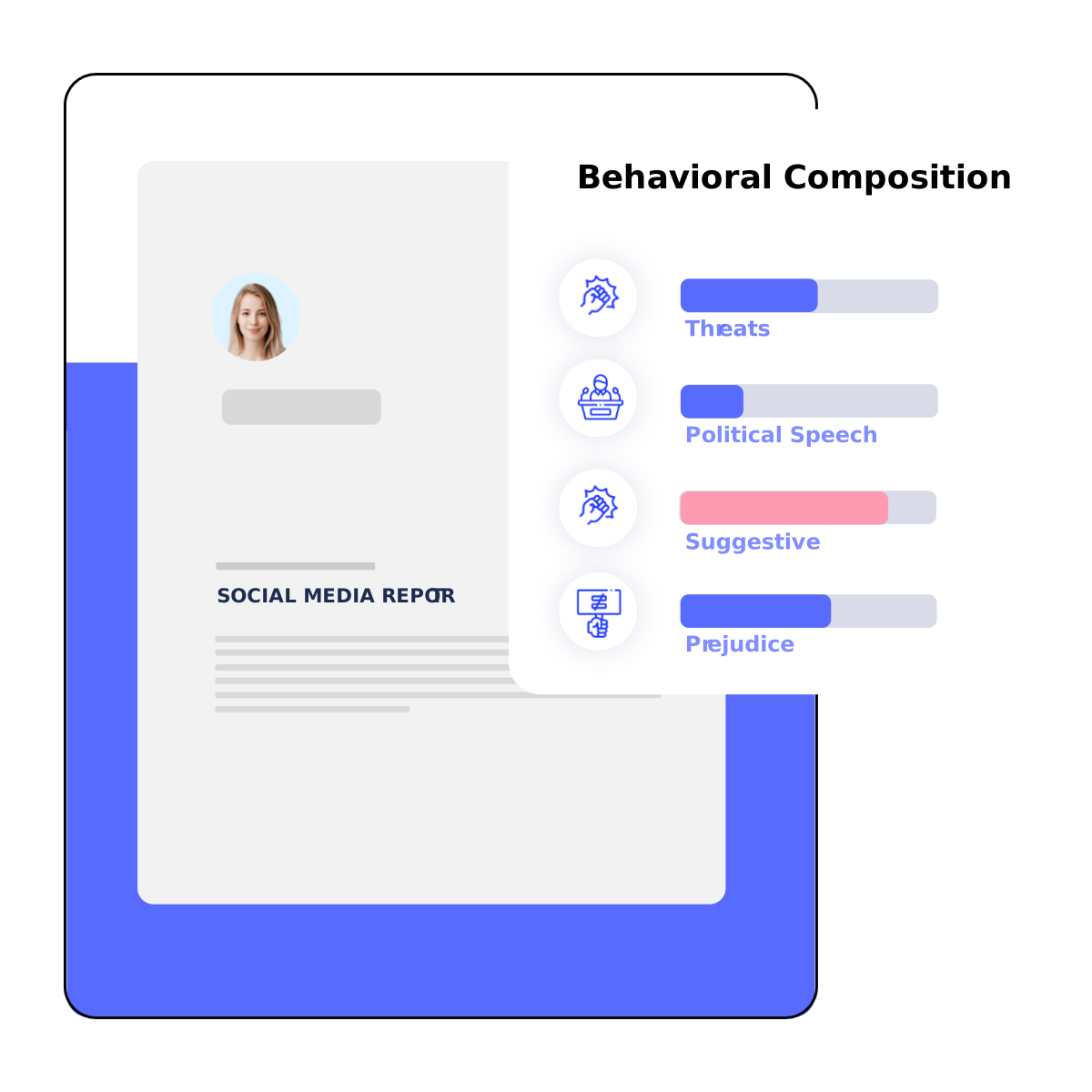
Authentic public behavior patterns are still one of the strongest indicators of workplace risk.
Behavioral scientists consistently validate that:
- violent rhetoric correlates with higher aggression
- repeated hostility signals workplace conflict
- discriminatory visible behaviors predict policy violations
- explicit content correlates with professionalism concerns
- harassment signals future interpersonal issues
These patterns, when authentic and contextualized, are powerful trust indicators.
5. AI’s Impact on Reputation Management
AI is reshaping reputation, both positively and negatively:
Positive:
- surfaces relevant patterns
- improves early detection
- enhances consistency
- removes bias from manual searches
- flags risk earlier than humans could
Negative:
- amplifies misinformation
- spreads false accusations
- enables malicious impersonation
- distorts digital footprints
HR teams must learn to operate in a world where truth is sourced, context is verified, and identity is proven — not assumed.
6. What HR Must Do to Stay Ahead of AI-Driven Risk
1. Treat digital identity as multi-layered
Not everything online reflects the candidate’s true behavior.
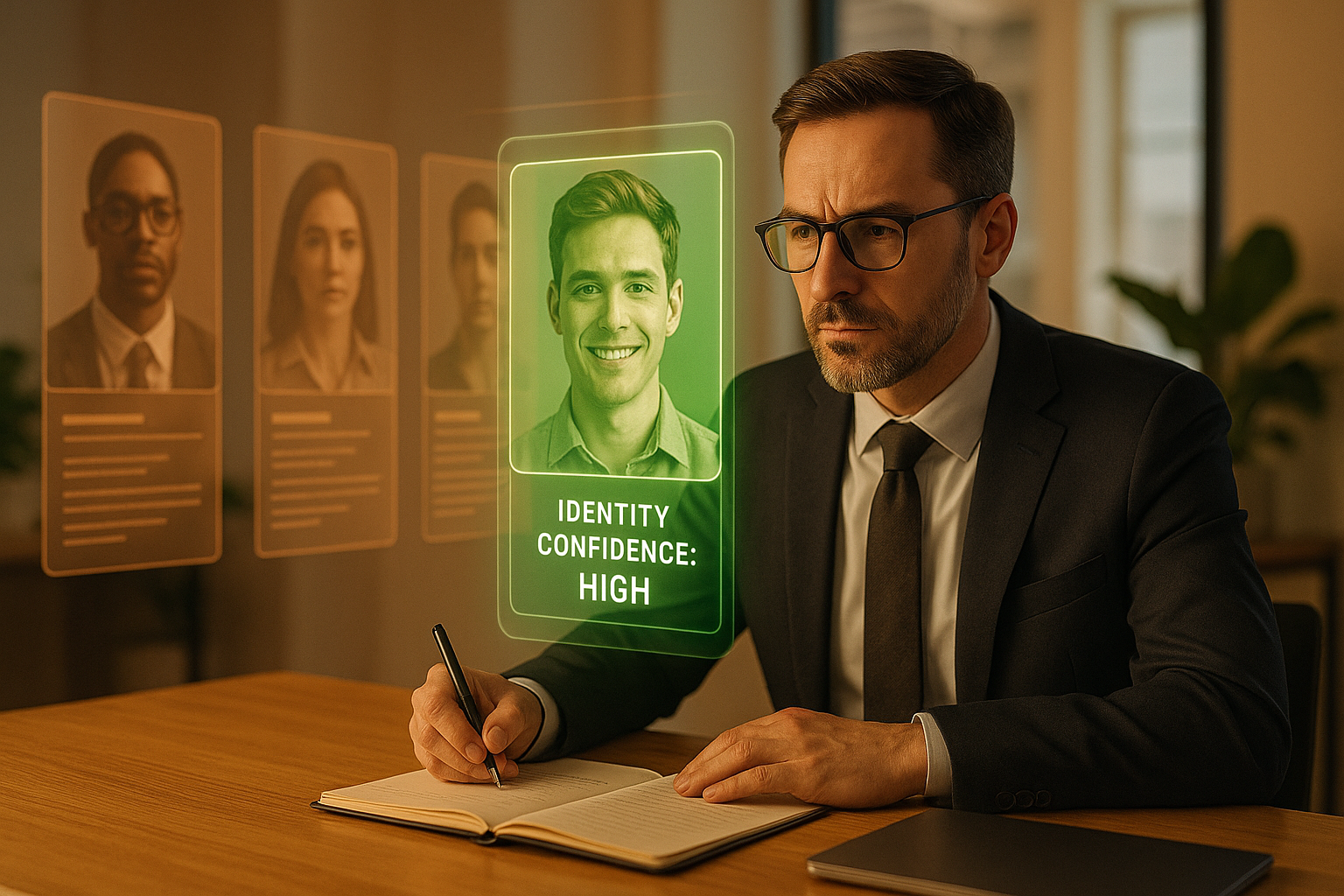
2. Use systems that verify identity before reviewing behavior
This prevents misattribution.
3. Use hybrid AI + human review
AI surfaces patterns.
Humans apply context.
4. Focus on risk-relevant categories
Not personality.
Not lifestyle.
Not protected-class information.
5. Prepare for synthetic reputation attacks
Employees increasingly face:
- impersonation
- targeted harassment
- synthetic screenshots
HR must know what’s real.
6. Build a trust-centered hiring process
Be transparent.
Explain the process.
Honor privacy boundaries.
Treat public behavior as a signal not a weapon.
7. The Bottom Line: The Future of Hiring Is Trust, Not Surveillance
AI hasn’t eliminated risk.
It has redistributed it.
The companies that thrive will:
- verify identity
- filter signal from synthetic noise
- use public behavior responsibly
- contextualize findings
- avoid protected-class exposure
- uphold fairness
- communicate transparently
AI changed everything except the fundamentals:
People want to work in places where they feel safe, respected, and understood.
Public digital behavior screening is not about catching people.
It’s about protecting trust.
That is the mandate for 2026 and beyond.