The NIL Paradox: Why College Athletes' Online Image is Now Their Strongest (and Weakest) Brand Asset


The value of a college athlete was once constrained to yards, points, and highlight clips; their on-field performance determined their potential. In the NIL era, the real game is played online, with potential measured in impressions, engagement, and virality. Anathlete's digital character can now be exchanged for life-changing deals or career-destroying scandals.
The Game has Changed: NIL Turned College Athletes into Marketable Assets
When college athletes gained the right to monetize their name, image, and likeness, everything changed.Their identity now extends far beyond the stadium: as influencers, entrepreneurs, and role models managing real audiences in real time. Today, aDivision II quarterback or a breakout track star has the same digital marketing potential as a professional athlete.
This opportunity carries new risks for sponsors and PR teams: Who are these athletes online? What do they stand for? How will their online image reflect back on your brand? In this new era, on-field performance is only part of the story; how an athlete navigates their digital world matters just as much.
The Hidden Metric: Digital Character Drives Trust
Digital character is the online expression of personal values, tone, and judgement. It encompasses what someone posts, who they follow, how they engage, and the narratives they contribute to.
Unlike brand image, one's digital character cannot be curated or easily controlled by a marketing team.It is raw, volatile, and traceable. For college athletes, this is both their greatest strength and their riskiest vulnerability. Their emotional intelligence and sociability are still developing, yet every post will contribute to a digital ecosystem that never forgets.
Put simply, strong digital character signals trust; weak digital character invites headlines.
An Authenticity Paradox: Playing With Fire?
Professional athletes often enter endorsement negotiations with PR staff and years of media exposure.College athletes do not.
Most manage their accounts themselves while juggling training, classes, and increasing public visibility.Their social media presence develops organically: unfiltered, authentic, and inconsistent.
This leaves sponsors in a paradoxical dilemma:
• Authenticity is what makes student-athletes interesting and valuable.
• Authenticity can turn student-athletes into liabilities.
A single overlooked tweet or repost from high school can derail a partnership and force a brand into crisis communications mode. In the digital age, nothing exists in a vacuum. That's why understanding an athlete's digital evolution, not just their current persona, is now a strategic priority.
Brands Don't Just Hire Talent, They Hire Timelines
When brands evaluate athletes for sponsorships, they're no longer reviewing a snapshot; they're reviewing a story. Alignment, authenticity, and trajectory matter more than follower counts.
• Alignment: Does the athlete's tone reflect our values?
• Authenticity: Is their engagement genuine or performative?
• Trajectory: Does their online behavior show maturity over time?
Because most athletes manage their own platforms, coherent digital timelines are few and far between. That's both the appeal and the challenge, and exactly where AI-driven social media screening changes the playbook.
The Risk Reality: One Post Can Rewrite a Partnership
Brands investing in NIL deals face a bitter truth: reputational damage can spread faster than the original post.
Old content with discriminatory language, impulsive humor, or heated replies can surface years later, and often out of context. These aren't necessarily character flaws, just reminders that digital footprints don't expire.
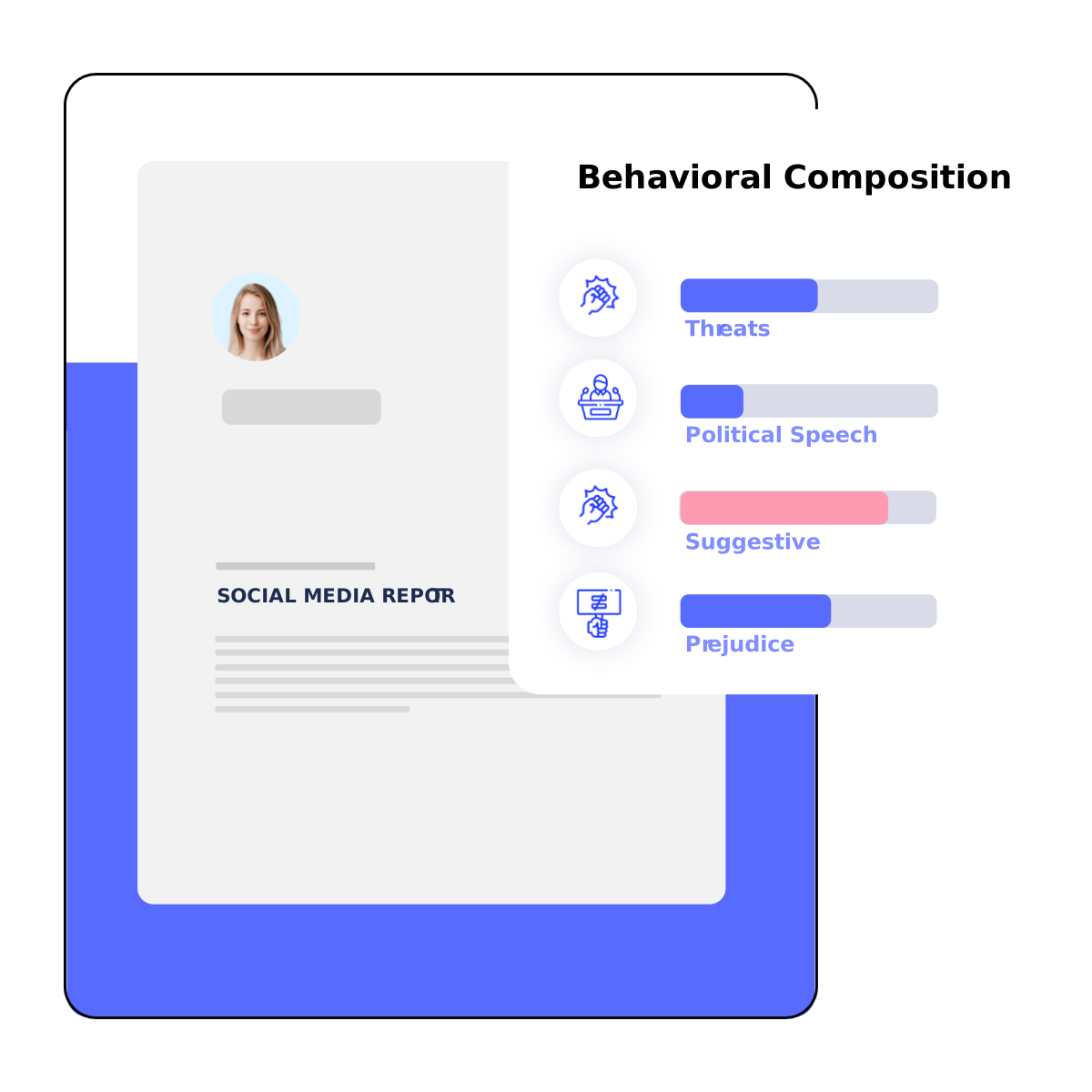
AI screening tools help teams surface such content early, interpret it in context, and protect both the brand and the athlete from preventable fallout.
The Smart Play: Use AI Screening as a Coaching Tool, Not a ComplianceCheck
The best organizations don't wield screening as a surveillance tool; they wield it as a tool for guidance and growth.
1. Establish consent and clarity: Explain how and why screening occurs.
2. Weigh context and growth: Behavior at 15 isn't the same as behavior at 21.
3. Share insights constructively: Digital maturity is teachable.
4. Monitor ethically and continuously: Online identities evolve, and screening should too.
AI behavioral screening shouldn't be punitive; it should help establish mutually beneficial, long-lasting partnerships between student-athletes and their sponsors.Screening solutions like Ferretly help firms decipher context and alignment well before the deal is inked.
Moving Forward: Predictive AI and the Creator Economy
As predictive AI evolves, screening will move beyond detecting risk to forecasting alignment. Models will assess an athlete's current digital character and project it forward, helping brands see not only where an athlete stands today, but where they're headed.
The creator economy, a never-growing digital ecosystem where individuals monetize through engagement, has democratized content creation and redefined how brands reach their audiences.
Proactivity will define the winners: brands that treat digital character as a predictive asset can secure the most promising student-athlete relationships.
The Bottom Line
In the NIL era, digital character is brand equity.
For sponsors, trust isn't built on highlights, it's built on history. AI-powered screening, when used responsibly, helps identify athletes who don't just represent your brand but embody it.
###
About This Article
This piece was developed as part of a University of Maryland writing practicum exploring AI ethics, responsible AI-assisted content creation, and advanced prompting techniques. The course was led by Adam Lloyd, Ph.D., with industry mentorship provided by Ferretly to ground coursework in real-world application and ethical AI use.
Student Author: Kristian Dell'Erba
→kdellerb@terpmail.umd.edu · LinkedIn
Course Faculty & Mentorship
Adam Lloyd, Ph.D. · Lecturer, University of Maryland
Adam teaches business and technical writing with a focus on real-world application—his courses partner with companies to create actual workplace deliverables. He co-created UMD's "Digital Rhetoric at the Dawn ofExtra-Human Discourse," exploring AI's role in academic, creative, and professional writing. A former journalist, startup founder, and award-honored educator, he holds advanced degrees in English, philosophy, and national security studies.
→lloyda@umd.edu · LinkedIn
Nicole Young · VP, Growth Marketing
Nicole provides industry mentorship for this course, bringing deep experience in growth marketing, advertising strategy, and AI-integrated content systems. Her work focuses on building ethical, scalable marketing programs at the intersection of technology, trust, and brand performance. She welcomes collaboration with academic programs seeking practitioner partnerships.
→nicole@ferretly.com · LinkedIn