Data Privacy: Turning Transparency into Trust


In today's digital world, data privacy has become more than a legal checkbox, it's a matter of trust. As technology weaves deeper into our lives, consumers are becoming more aware of how their personal information is collected, stored, and used. They expect transparency and control, whether it's deciding what data a company can track or understanding how that data is shared. With technology evolving so quickly, the rules around data privacy are evolving as well.
Governments across the globe are enacting stricter regulations, from the EU's General Data ProtectionRegulation (GDPR) to California's Consumer Privacy Act (CCPA).
But privacy isn't a burden, it's a chance for brands to differentiate themselves.
Younger generations, particularly Gen Z, are reshaping how companies interact with their consumer base. People are favoring brands that follow responsible digital practices such as prioritizing transparency and control over their information. To stay ahead in an increasingly connected world, companies need to start embracing privacy-first behavior.
Here are some cases where companies have failed or succeeded to uphold data privacy in the past.
The Facebook Data Privacy Scandal
Back in 2018, theFacebook-Cambridge Analytica scandal drew widespread public attention. Millions of Facebook users unknowingly had their personal data collected by the political consulting firm Cambridge Analytica through seemingly harmless user surveys. However, this data wasn't just about likes or hobbies; it included more detailed personal information that could be leveraged to build social profiles. Those profiles were later used to inform personalized political adsduring elections.
Lessons in Losing Trust
Where Facebook really stumbled was in transparency and oversight. Users weren't clearly informed about how their data might be shared or used, and when concerns were raised, Facebook didn't promptly disclose the extent of the misuse, leading to a setback in user trust. Internally, the focus seemed more on growth than on protecting user data, showing that even a prolific company can misstep when privacy isn't a core responsibility. Consumers expect brands to be upfront, accountable, and proactive about how their data is used.
Apple's Data Privacy Ad Campaign
Apple has taken a very different approach to data privacy, using it as a central part of their brand identity. In recent years, they have run ad campaigns with the phrase,"Privacy. That's iPhone," highlighting how features such as AppTracking Transparency and Mail Privacy Protection put users in control of their own data. Apple consistently emphasizes that they don't sell personal information to advertisers, and that apps must request explicit permission to track users across other apps and websites. The messaging is clear, simple, and reinforces the idea that choosing Apple means choosing privacy.
Lessons in Earning Trust
What Apple gets right is making privacy feel like a tangible benefit rather than a vague promise. By giving users real control, like being able to see which apps are tracking them or blocking cross-app tracking entirely, they build trust through transparency and action, not just marketing. Their approach shows that privacy can build consumer trust, making customers feel empowered, respected, and more likely to remain loyal to a brand that puts them first. Apple also backs their messaging with consistent product features, demonstrating how they deliver on their promise.
Doing Data Privacy Right
For consumer brands, building trust starts with treating data privacy as a core business principle rather than an afterthought. Strong privacy practices build trust, and that trust extends beyond consumer relationships to how employees represent a company online. Doing data privacy right means using information responsibly, transparently, and only when it serves a clear purpose.
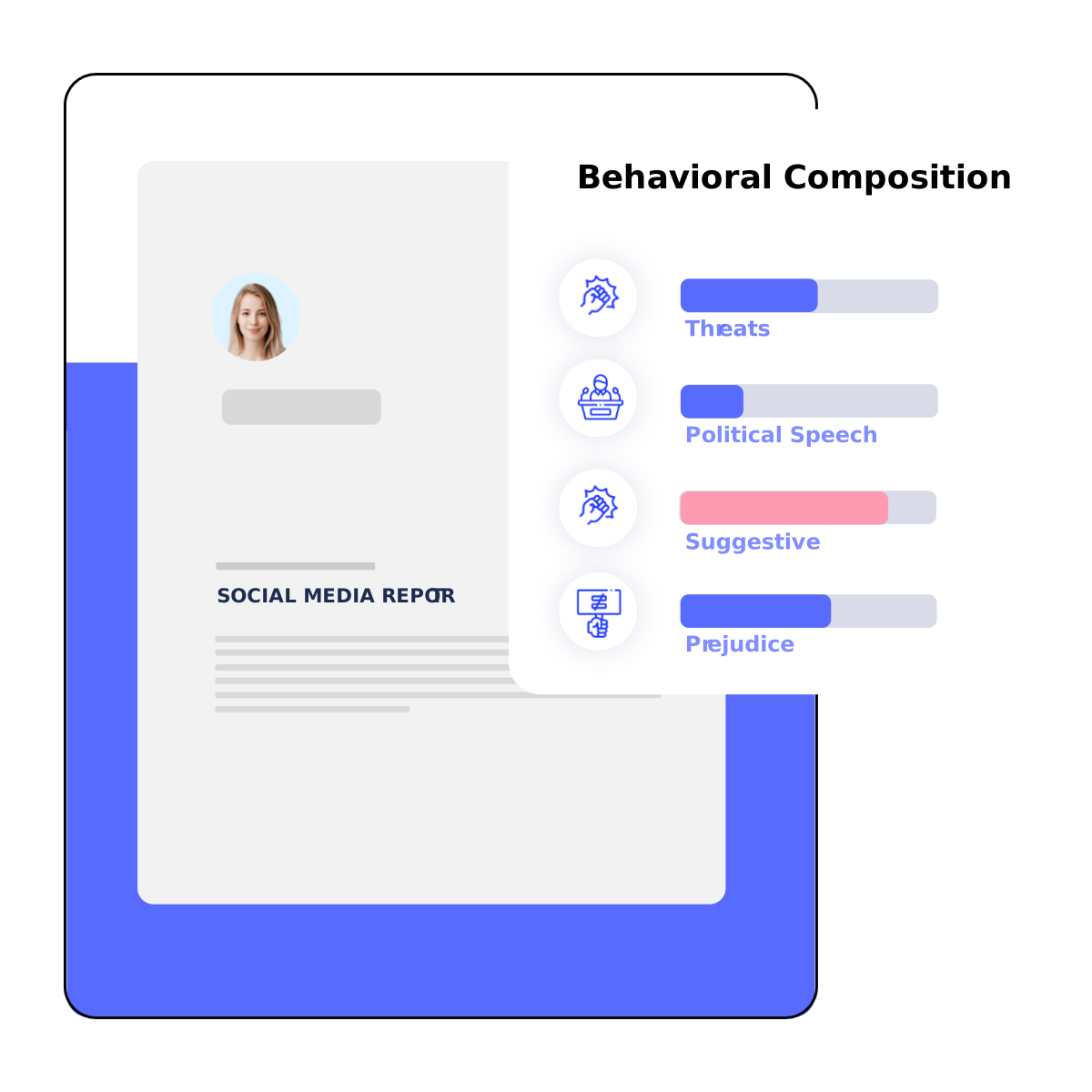
That's where Ferretly comes in—helping organizations evaluate publicly available online behavior for hiring transparency without collecting or storing personal data, allowing brands to gain meaningful insight while respecting individual privacy.
To make privacy a competitive advantage, brands should focus on actionable practices that are easy for both teams and consumers to understand:
1. Transparency: Clearly communicate what data you collect, how it's used, and who it's shared with.
2. Consent and Control: Give users real choices over their data, including easy opt-in/opt-out options and tools to manage preferences.
3. Limited Data: Collect only what's necessary, store it securely, and regularly assess your internal systems for vulnerabilities.
By consistently applying these principles, brands can turn privacy into a meaningful differentiator that builds loyalty and long-term customer trust.
Building a Better Brand
Business is personal, and how a brand handles data plays a huge role in upholding healthy digital practices.Given Gen Z's heightened privacy awareness and technological fluency, there's a growing expectation for transparency from brands and employers. Companies that manage data responsibly not only protect their customers but also strengthen their reputation and make smarter decisions.
Ferretly helps brands translate responsible data practices into digital trust by providing insight into how employees represent a company online, helping organizations make informed hiring decisions while maintaining strict privacy standards and ensuring responsible, ethical use. By reinforcing trust at the employee level, brands can better align behavior with values. When consumers believe in your brand, they're believing in the people who represent it.
###
About This Article
This piece was developed as part of a University of Maryland writing practicum exploring AI ethics, responsible AI-assisted content creation, and advanced prompting techniques. The course was led by Adam Lloyd, Ph.D., with industry mentorship provided by Ferretly to ground coursework in real-world application and ethical AI use.
Student Author: Jake Hugh-Jones
→jhughjon@terpmail.umd.edu · LinkedIn
Course Faculty & Mentorship
Adam Lloyd, Ph.D. · Lecturer, University of Maryland
Adam teaches business and technical writing with a focus on real-world application—his courses partner with companies to create actual workplace deliverables. He co-created UMD's "Digital Rhetoric at the Dawn ofExtra-Human Discourse," exploring AI's role in academic, creative, and professional writing. A former journalist, startup founder, and award-honored educator, he holds advanced degrees in English, philosophy, and national security studies.
→lloyda@umd.edu · LinkedIn
Nicole Young · VP, Growth Marketing
Nicole provides industry mentorship for this course, bringing deep experience in growth marketing, advertising strategy, and AI-integrated content systems. Her work focuses on building ethical, scalable marketing programs at the intersection of technology, trust, and brand performance. She welcomes collaboration with academic programs seeking practitioner partnerships.
→nicole@ferretly.com · LinkedIn