Staffing Firms: Reduce the Rehire Risk


Nearly 40% of new hires fail within 18 months, often because of behavioral or cultural mismatches that traditional screenings overlook. At Ferretly, we see this failure rate as a signal, one that highlights the growing need for behavioral insight alongside traditional background checks. For staffing firms, those failures are more than numbers, they're expensive reminders that skill alone doesn't equal fit. A single misaligned placement, like a candidate whose online hostility contradicts a client's collaborative culture, can lead to early churn and replacement costs averaging one-third of the employee's annual salary.
Why Rehire Risk Is Rising for Staffing Firms
Rehire risk refers to the likelihood that a placed candidate fails due to poor fit or misconduct, forcing a costly replacement. For staffing firms, it's a double blow: lost productivity and disappointed clients. A poor placement doesn't just impact a single role, it can ripple across contracts, weaken relationships, and damage credibility in competitive markets.
Industry analyses suggest that bad hires can cost 30% of first-year earnings, encompassing recruiting time, onboarding, training, and lost productivity. Beyond the financial cost, firms risk losing repeat business, referrals, and long-term partnership value.
The Limits of Traditional Background Checks
Avoiding that spiral requires assessing more than qualifications. Traditional background checks focus on the past, criminal records, employment history, and education verification. They rarely reveal who a candidate is today.
In a digital world, candidates leave online footprints that reflect integrity, communication style, and cultural alignment. Yet most legacy systems ignore this behavioral data, leaving firms blind to early warning signs such as patterns of hostility, harassment, bias, or other risk indicators that may influence on-the-job performance.
This gap leaves staffing firms vulnerable to the very issues that drive rehire risk: poor fit, values misalignment, and avoidable behavioral conflicts.
Compliance Expectations Are Changing
Federal compliance expectations continue to evolve. Both the Fair Credit Reporting Act (FCRA) and the EqualEmployment Opportunity Commission (EEOC) require transparency, fairness, and bias mitigation in all screening practices.
Staffing firms are now expected to balance three priorities simultaneously:
• Ethical boundaries
• Behavioral insight
• Regulatory compliance
This is where modern, human-centered technology becomes essential.
Where Ethical AI Strengthens the Hiring Process
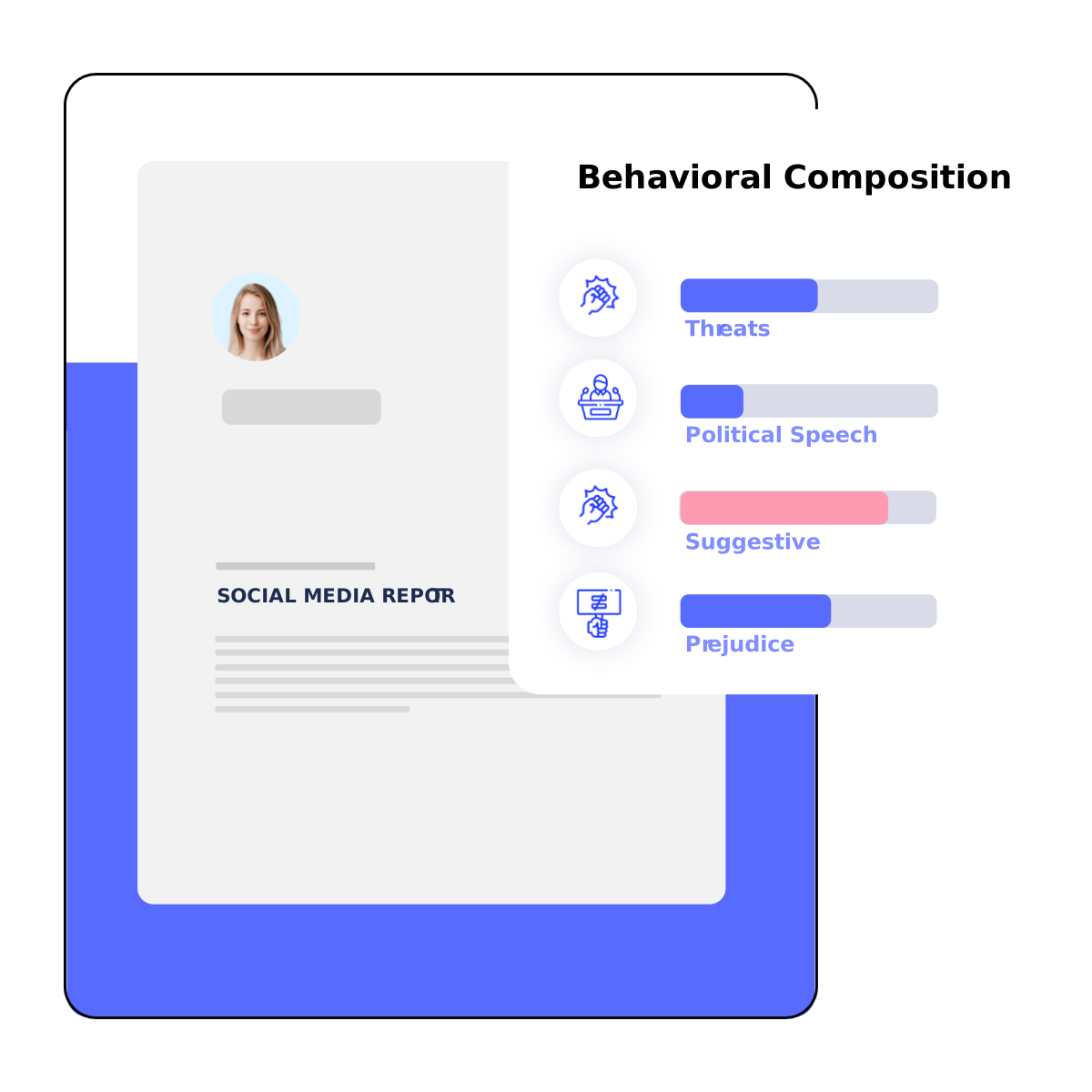
Human-centered automation bridges the gap between efficiency and ethics. AI-powered tools like Ferretly's behavioral social screening platform analyze public online content for risk signals such as hateful expressions, harassment, threats, or toxicity, while preserving privacy and compliance standards.
For recruiters, this means:
• Faster candidate reviews
• Smarter placements
• Reduced rehire risk
• Consistent, defensible screening processes
Digital Integrity Screening Builds Trust
Digital integrity screening empowers staffing firms to deliver consistent quality and transparency. The result isn't just fewer poor placements, it's stronger partnerships built on trust.
In staffing, trust is currency. Firms that safeguard client reputations don't just fill roles; they create enduring relationships based on diligence, compliance, and alignment.Standardizing trust-based screening elevates staffing firms from vendors to strategic advisors.
Companies like Ferretly help staffing partners identify alignment and risk signals earlier, ensuring every candidate represents both competence and character.
The Future of Rehire Risk Reduction
In an era where behavior is data, the staffing firms who read between the lines will define the next generation of trust. Reducing rehire risk is about empowering firms to place the right candidates with confidence.
The future of hiring belongs to those who pair data with discernment and protect both people and reputation through modern, ethical screening intelligence.
###
About This Article
This piece was developed as part of a University of Maryland writing practicum exploring AI ethics, responsible AI-assisted content creation, and advanced prompting techniques. The course was led by Adam Lloyd, Ph.D., with industry mentorship provided by Ferretly to ground coursework in real-world application and ethical AI use.
Student Author: Phillip Nguyen
→pnguye04@terpmail.umd.edu · LinkedIn
Course Faculty & Mentorship
Adam Lloyd, Ph.D. · Lecturer, University of Maryland
Adam teaches business and technical writing with a focus on real-world application—his courses partner with companies to create actual workplace deliverables. He co-created UMD's "Digital Rhetoric at the Dawn ofExtra-Human Discourse," exploring AI's role in academic, creative, and professional writing. A former journalist, startup founder, and award-honored educator, he holds advanced degrees in English, philosophy, and national security studies.
→lloyda@umd.edu · LinkedIn
Nicole Young · VP, Growth Marketing
Nicole provides industry mentorship for this course, bringing deep experience in growth marketing, advertising strategy, and AI-integrated content systems. Her work focuses on building ethical, scalable marketing programs at the intersection of technology, trust, and brand performance. She welcomes collaboration with academic programs seeking practitioner partnerships.
→nicole@ferretly.com · LinkedIn