How a Single Social Media Post Can Impact Brand Equity


Is that post you just finished uploading to your social media about to get you fired? Did you recognize any potential consequences at all before you pressed upload?
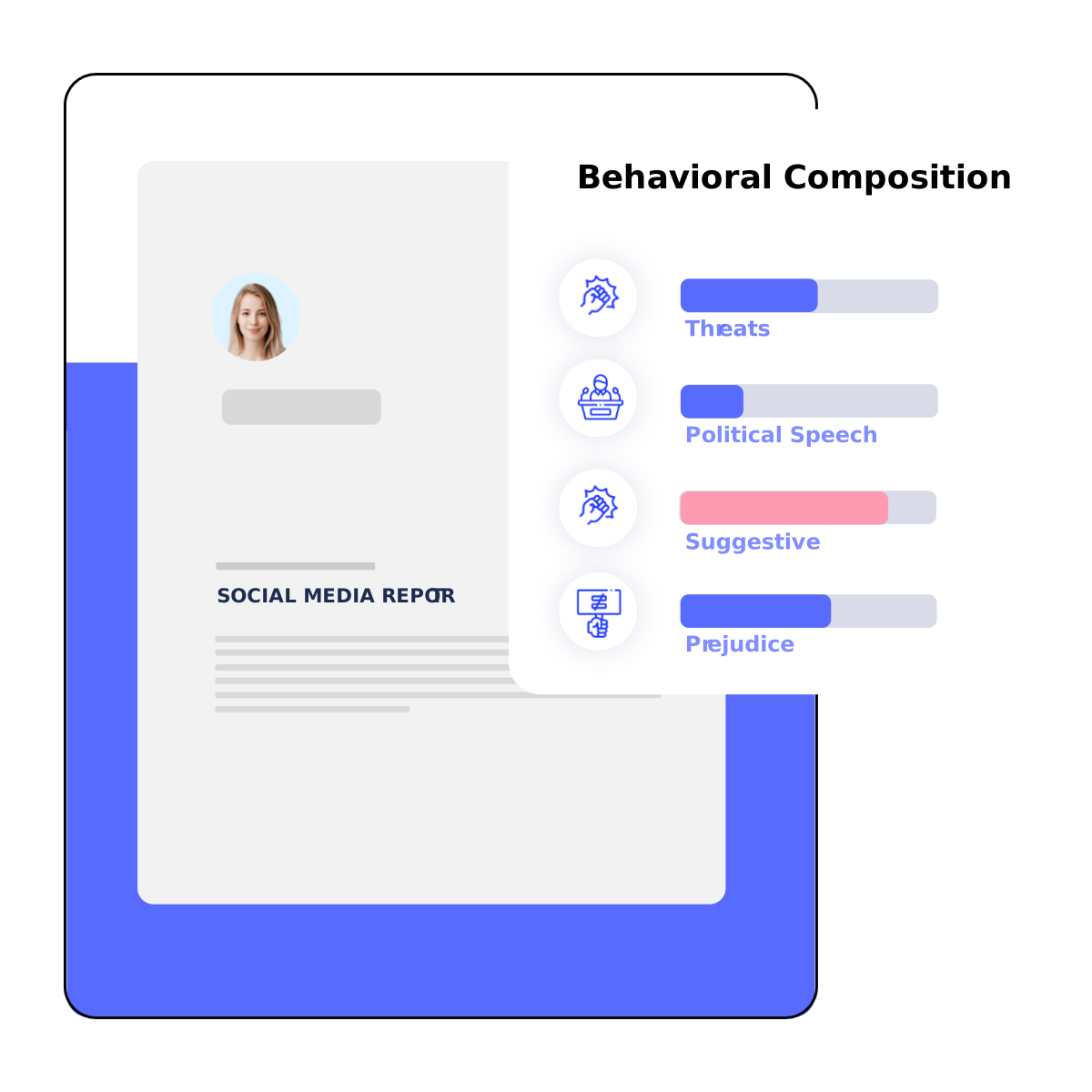
In a digital age, it is no secret that social media posts are one of the most obvious indicators of who a person truly is. A single social media upload can provide insight to an individual's values, culture, and personal beliefs. It is also no secret that employers are taking advantage of this information posted online - and all for good reason.
Social Media Posts: Defining Individuals Online
Whether one stops to reflect upon their social media posts or not, or they agree with others' perceptions about who they are from their posts - it is essential to understand that perception is reality.
From likes, to shared stories, comments, digital uploads and everything else in between, an individual's online presence leaves behind a digital footprint - depicting who they are as a person for the viewers of their social media activity.
Think about it. You're scrolling through social media and come across a post that you resonate with, or on the other hand, a post that you find inappropriate or disturbing based on its content. While looking at these posts, you are able to see who else has interacted with these posts, liking, commenting, or sharing the posts at hand ,etc. The way an individual interacts with that post, and your personal feelings about the post, tells you everything you need to know about that person - and even the one who made the original social media upload.
Employers are no different than yourself. By monitoring employees' social media postings and their actions online, employers are able to understand the defining values, cultures, and beliefs of their employees.
Why Employers are Concerned About Employees' Online Actions
It's simple. Employees are a direct reflection of the company they work for - whether they realize it or not. This is especially true in regards to Direct To Consumer (DTC) and Retail brands.
When an employee of a DTC orRetail brand makes a social media post or interacts with posts online, they define not only characteristics about themselves, but also characteristics of the brand they work for.
The problem occurs when an employee's social media activity leaves a bad taste in the mouth of consumers.Consumers directly associate employees with their employer, and in turn negative online experiences can result in turning away customers from the DTC or Retail brand.
These negative experiences single handedly can reduce consumer support and hinder overall brand equity.
While this may seem like a rare occurrence, it is happening in real time.
Real World Social Media Posts and Employee Termination
One of the most widespread employee terminations that took place in recent months due to social media postings revolves around the death of Charlie Kirk. National Public Radio (NPR)reported that over 30 employee terminations took place just within five days of the assassination, while The New York Times reports over 145 different cases where employees were either fired, suspended, forced to resign, or placed under investigation in the workplace due to statements made in regards to the death of Kirk.
These social media posts directly reflected upon their employers in this situation - even if that was not the intent of the employees. As employers wanted to protect their brands and make clear that they did not condone the employee's actions, statements, or beliefs, they terminated employees to protect their brands.
While this may seem a bit extreme, employee outreach is greater than one may think.
Employee Outreach: Greater Than That of The Company They Work For
Forbes reports that,"brand messages shared by employees on social media earn 561 percent more reach than the same messages shared by the brand's social media channels - and eight times more engagement."
In a social media driven world, this is huge! Employee outreach on social media is tremendously larger than that of their employer - it is almost always the employees and their actions online that paint the picture of the company they work for.
This extensive outreach is why it is so important for employers to monitor social media activity of their employees. Consumers are reached through employee social media, and in turn consumers gain an understanding of the DTC or Retail brand through these social media experiences. Employees' social media activity can be a direct reflection of their employer, affecting the reputation and overall equity of the company.
What Employers Can Do To Protect Brand Equity
The obvious thing to do is to avoid hiring employees whose social media activity does not reflect upon the desired reputation or values of the company at hand. While it is very important to understand how negative consumer experiences online of employees' social media behaviors can negatively impact brand reputation and equity, there is a flip side to the coin.
DTC and Retail brands can set out to hire employees that reflect their company brand, its desired values, culture and reputation by understanding the perception that employees have on their social media accounts. While it is just as important to avoid hiring the wrong people, it is arguably more important to hire the right people for your brand.
Finding the right individuals that reflect your company brand, is extremely important in scaling brand equity and protecting its reputation all the while boosting its exposure and public insight. Positive interactions between employees' social media activity and consumers online will strengthen the reputation of the brand, create consumer awareness and support of the brand, in turn enhancing brand equity.
By utilizing social media screening offered by Ferretly to hire employees, it can ensure through social media screening of potential employees that brand equity is not only protected- but enhanced by hiring the right kind of employees for your DTC or RetailBrand.
###
About This Article
This piece was developed as part of a University of Maryland writing practicum exploring AI ethics, responsible AI-assisted content creation, and advanced prompting techniques. The course was led by Adam Lloyd, Ph.D., with industry mentorship provided by Ferretly to ground coursework in real-world application and ethical AI use.
Student Author: Parker Miller
→phmill04@terpmail.umd.edu · LinkedIn
Course Faculty & Mentorship
Adam Lloyd, Ph.D. · Lecturer, University of Maryland
Adam teaches business and technical writing with a focus on real-world application—his courses partner with companies to create actual workplace deliverables. He co-created UMD's "Digital Rhetoric at the Dawn ofExtra-Human Discourse," exploring AI's role in academic, creative, and professional writing. A former journalist, startup founder, and award-honored educator, he holds advanced degrees in English, philosophy, and national security studies.
→lloyda@umd.edu · LinkedIn
Nicole Young · VP, Growth Marketing
Nicole provides industry mentorship for this course, bringing deep experience in growth marketing, advertising strategy, and AI-integrated content systems. Her work focuses on building ethical, scalable marketing programs at the intersection of technology, trust, and brand performance. She welcomes collaboration with academic programs seeking practitioner partnerships.
→nicole@ferretly.com · LinkedIn