Social Media Screening for Private Security: What Actually Predicts Risk


The Olympia Harbor Days festival made headlines this August - but not for the boats. That's because a security guard they hired turned out to have a Facebook page featuring anti-LGBTQ content and violent imagery. The discovery triggered immediate backlash, a public apology, and the organizers cutting ties with the security company.
One viral incident. One lost contract. And a Google result that will never go away.
The security guard almost certainly had a clean background check: Spotless criminal record, verified employment history, proper credentials. What the organizers missed wasn't what he'd done. It was who he was. Traditional background checks verify facts. Social media screening reveals behavior. For private security firms, that distinction means everything. It's the difference between keeping and losing clients.
The Problem With Current Screening
Social media screening is already the norm. Three-quarters of hiring managers review candidates' online presence, according to a 2023 survey. The problem? Most suck at it. The same study found that 68% of employers use social media to find answers to questions they're legally prohibited from asking in interviews: age, politics, marital status. And 85% have rejected candidates based on what they found.
That's not risk assessment.That's lazy, biased guesswork. Security firms need a system built to evaluate real risk, not social media vibes. That's exactly what platforms like Ferretly are designed for.
Smart Screening vs. Lazy Screening
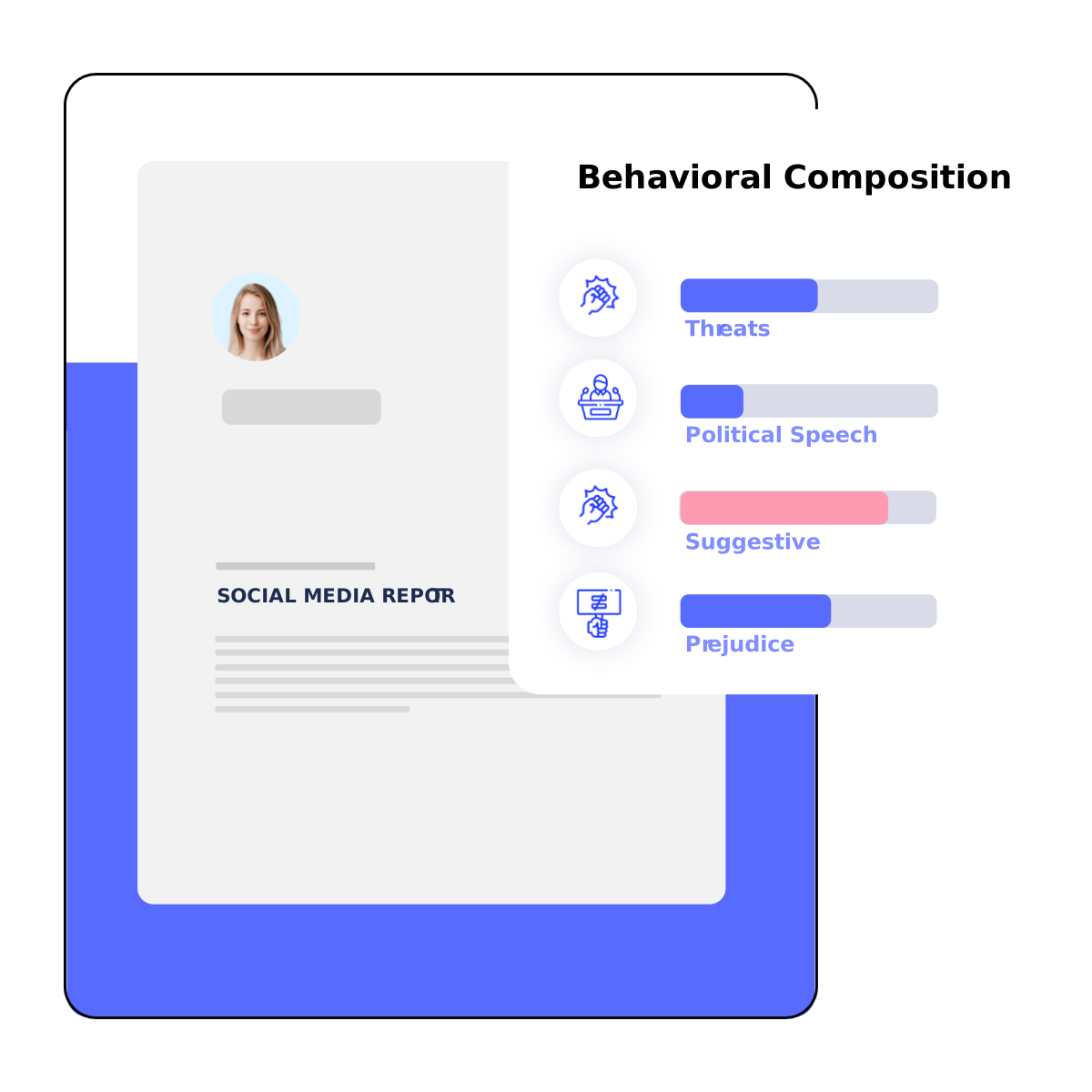
Everyone screens. The difference is how. Lazy screening looks for personal beliefs and "bad vibes." Smart screening evaluates risk behaviors. Four categories predict real-world security risk.
Operational Security — When Oversharing Becomes aLiability
Start with the obvious: posts revealing client locations, schedules, or procedures. Geotagged photos from work sites. Details that could compromise operations.
Discretion is the foundation of security work. One careless Instagram story can destroy trust and endanger clients.
But not every post is an operational security threat. Posting vacation photos? Fine. A selfie in uni format a generic location? Somewhat unprofessional, but likely harmless. Posting about who and where you're guarding? That's a disaster waiting to happen.
The question isn't "Dothey post their location online?" It's "Do they understand professional boundaries?"
Impulse Control — Beyond Online Arguments
Look for patterns of hostile interactions. Threats, glorifying violence, inability to disengage from conflict.
In security work, you need composure. You need to know when to walk away. If someone can't stay calm in aTwitter argument, don't expect them to stay calm and de-escalate at work.
But here's the thing: Every one argues online at some point. That's not disqualifying. What matters is severity and frequency. One angry post about politics or sports? Normal human behavior.A feed full of fights, threats, and escalations? That's a person who seeks conflict instead of solving it.
Assess pattern, not isolated moments. Look for inability to stay composed, not just occasional frustration.
Financial Vulnerability — The Bias Problem
Firms screen for posts about debt, money struggles, or sudden lifestyle changes.
Financial stress plus access to wealth creates theft and bribery risk. That's legitimate. But let's be honest about what financially stressed means in 2025 - 42% of younger workers a reliving paycheck-to-paycheck. The average public university degree costs $32,000in loans.
If you're screening out anyone who mentions financial struggles, you're not assessing risk. You're screening out nearly half of your candidates.
What actually predicts problems: sudden unexplained wealth after visible struggle, attempts to monetize client information, gambling addiction patterns. Financial hardship isn't a character flaw. But sudden behavioral changes around money are worth a second look.
Ideological Extremism
Screen for extremist symbolism, hate group affiliation, and harmful or disparaging content targeting specific groups—especially when it normalizes or encourages violence.
This should be obvious, butHarbor Days proved it's not. Their security guard had anti-LGBTQ content and violent imagery all over Facebook. Clean criminal record, dirty social media.
The distinction is simple: Having political opinions is fine. Posting harmful and disparaging toward specific groups isn't.
What This Means for the Industry
Smart screening protects clients without discriminating against candidates for irrelevant reasons.That's the goal.
To screen effectively in 2025, firms need to distinguish between legitimate behavioral red flags and just being a normal person online. That requires standardized frameworks, not gut-feeling judgments. Everyone evaluated the same way, against clear criteria.
Platforms like Ferretly help firms standardize these judgments before and after hire, catching actual red flags while reducing case-by-case bias.
The Olympia Harbor Days festival organizers learned this the hard way. Private security firms don't have to.
###
About This Article
This piece was developed as part of a University of Maryland writing practicum exploring AI ethics, responsible AI-assisted content creation, and advanced prompting techniques. The course was led by Adam Lloyd, Ph.D., with industry mentorship provided by Ferretly to ground coursework in real-world application and ethical AI use.
Student Author: Nikolas Brown
→nbrown25@terpmail.umd.edu · LinkedIn
Course Faculty & Mentorship
Adam Lloyd, Ph.D. · Lecturer, University of Maryland
Adam teaches business and technical writing with a focus on real-world application—his courses partner with companies to create actual workplace deliverables. He co-created UMD's "Digital Rhetoric at the Dawn ofExtra-Human Discourse," exploring AI's role in academic, creative, and professional writing. A former journalist, startup founder, and award-honored educator, he holds advanced degrees in English, philosophy, and national security studies.
→lloyda@umd.edu · LinkedIn
Nicole Young · VP, Growth Marketing
Nicole provides industry mentorship for this course, bringing deep experience in growth marketing, advertising strategy, and AI-integrated content systems. Her work focuses on building ethical, scalable marketing programs at the intersection of technology, trust, and brand performance. She welcomes collaboration with academic programs seeking practitioner partnerships.
→nicole@ferretly.com · LinkedIn