When Culture Becomes the Product: Why Lifestyle Brands Can't Separate Wellness from Behavior


When Wellness Turns Reputational
Picture a typical scenario in today's wellness industry: in July 2024, a global athleisure brand found itself trending for all the wrong reasons. Screenshots of employees mocking body positivity influencers surfaced online just weeks after the company launched a campaign celebrating "wellness for everybody." Within hours, the same community it claimed to champion turned against it.
This wasn't a product failure.It was a culture failure.
Edelman's 2025 Brand Trust report shows that 73 percent of consumers lose trust when employee actions contradict a brand's values. In a world where brand and culture are inseparable, even one employee's behavior can create outsized damage.
The Brand-Culture Convergence
Lifestyle and wellness brands don't just sell products; they sell values. Their credibility depends on internal consistency, on how teams act, speak, and live the principles they promote. Employees are no longer just workers; they are public ambassadors whose tone and conduct directly shape brand trust.
McKinsey's Future of Wellness2025 survey shows that the two-trillion-dollar wellness economy is now driven by consumers who see wellness as part of their identity.
What used to be a marketing problem is now a cultural intelligence problem.
The Blind Spot in Culture-First Hiring
Traditional background checks verify credentials, not culture. They flag criminal records but miss the nuances of empathy, tone, and professionalism that define the wellness ethos.
The PwC Trust in BusinessSurvey 2024 found an 18-point gap between executive perception of employee trust and what employees actually report. That disconnect reflects how surface-level screening fails to predict behavior that shapes trust from the inside out.
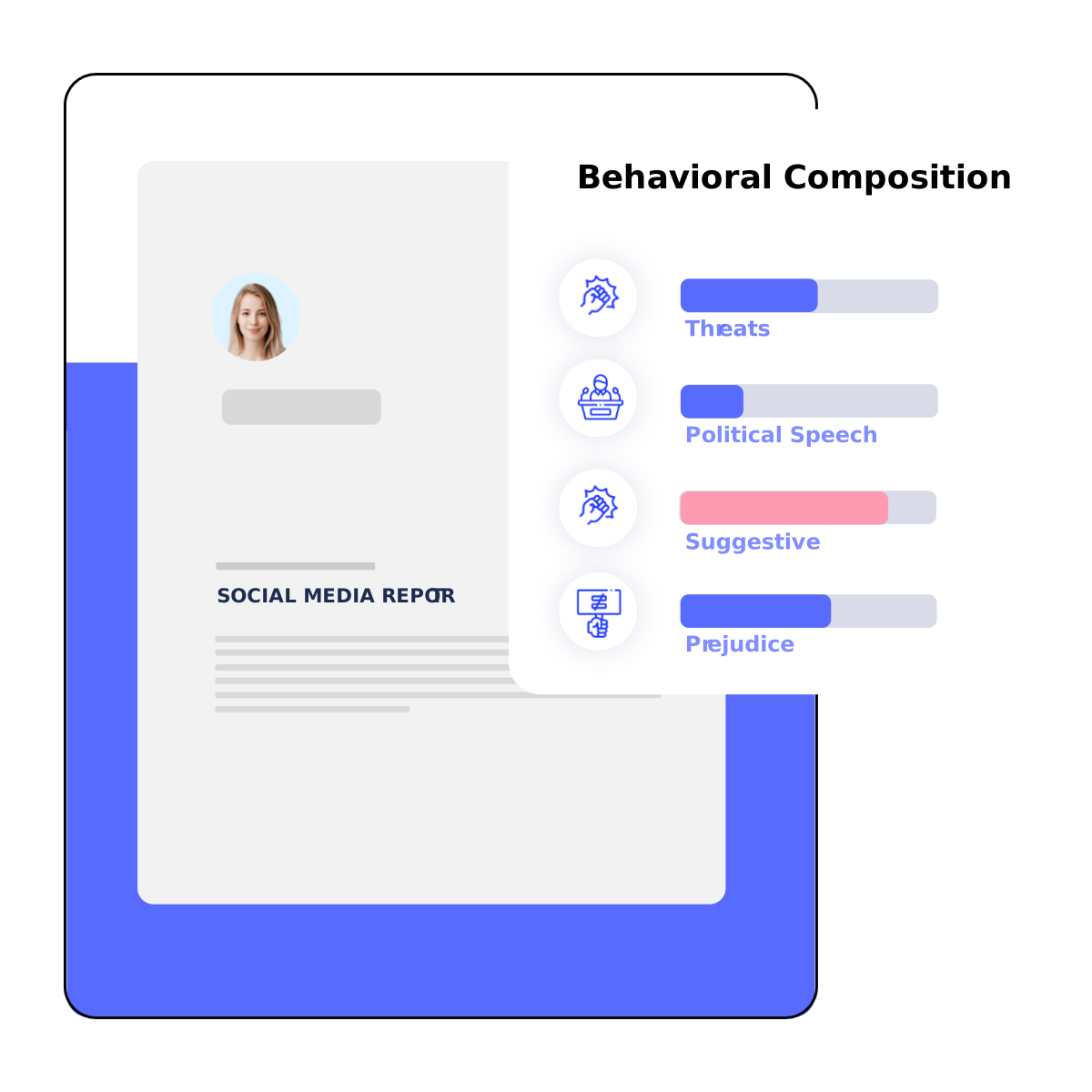
Ferretly's digital reputation analysis fills that gap by analyzing behavioral patterns rather than isolated events. It helps lifestyle brands see whether a candidate's communication style, public tone, and digital footprint align with company values before reputational missteps become public.
From Policing Behavior to Understanding Culture Fit
In the wellness space, the goal isn't to police employees; it's to ensure coherence between people and purpose.
Modern screening identifies behavioral signals, not judgments or "red flags." These signals such as how a person communicates, responds to disagreement, or engages with social issues, reveal emotional intelligence and value alignment that traditional checks miss.
Ferretly's behavioral intelligence tools allow employers to evaluate patterns of online behavior objectively, removing political or demographic bias while maintaining fairness.For Gen Z, who see brand alignment as a measure of authenticity, that matters.The Global Wellness Institute (2025) reports that inclusive workplaces boost employee satisfaction by 32 percent and overall well-being by 43 percent.Screening for alignment and inclusion builds both.
The Culture Slip
Imagine a fast-growing yoga apparel company onboarding a new social media lead. The candidate passes every conventional background check. But months later, customers discover posts mocking wellness influencers and dismissing mental health advocates. Within hours, ToxicWellness trends.
The fallout isn't about a single person's opinion; it's about brand authenticity collapsing in real time. Digital culture isn't separate from corporate culture, it is corporate culture.
How Lifestyle Brands Protect Integrity from the Inside Out
To prevent reputational drift, wellness brands are re-engineering culture around behavioral integrity. Three practices stand out:
1. Screen for alignment, not perfection. Use behavioral signals to identify values consistency without bias. Ferretly helps surface contextual patterns that reflect a brand's core ethos.
2. Establish digital conduct standards. Define how employees engage online as part of brand training, not just compliance. According to Qualtrics' 2025 Employee Trust Index, organizations with clear digital ethics policies score 28 percent higher in employee loyalty.
3. Close the feedback loop. Encourage employees to flag reputation risks early and reward transparency. Early detection protects both people and brand integrity.
Together, these steps create what Ferretly calls reputation intelligence: a proactive, human-centered approach to preserving authenticity at scale.
The Culture You Keep
As wellness brands continue blurring the line between lifestyle and identity, culture will become their most valuable and most vulnerable asset. The next era of brand trust won't be defined by who talks wellness best, but by who lives it digitally, behaviorally, and organizationally. In a world where values are visible, culture isn't just a competitive advantage. It's the brand itself.
###
About This Article
This piece was developed as part of a University of Maryland writing practicum exploring AI ethics, responsible AI-assisted content creation, and advanced prompting techniques. The course was led by Adam Lloyd, Ph.D., with industry mentorship provided by Ferretly to ground coursework in real-world application and ethical AI use.
Student Author: Nathan Ellis
→ellisn25@terpmail.umd.edu · LinkedIn
Course Faculty & Mentorship
Adam Lloyd, Ph.D. · Lecturer, University of Maryland
Adam teaches business and technical writing with a focus on real-world application—his courses partner with companies to create actual workplace deliverables. He co-created UMD's "Digital Rhetoric at the Dawn ofExtra-Human Discourse," exploring AI's role in academic, creative, and professional writing. A former journalist, startup founder, and award-honored educator, he holds advanced degrees in English, philosophy, and national security studies.
→lloyda@umd.edu · LinkedIn
Nicole Young · VP, Growth Marketing
Nicole provides industry mentorship for this course, bringing deep experience in growth marketing, advertising strategy, and AI-integrated content systems. Her work focuses on building ethical, scalable marketing programs at the intersection of technology, trust, and brand performance. She welcomes collaboration with academic programs seeking practitioner partnerships.
→nicole@ferretly.com · LinkedIn