Insurance Carriers and Agencies: Vet With Confidence


The Stellar Expectation of Trust
The insurance industry is predicated on cautious, calculated optimism, with minor numerical changes in actuarial mathematics having the potential to affect millions of dollars of revenue for a business that the entire country is dependent on. Within the precision that this industry requires, it is easy for details and accuracy in other parts of the business where things can easily become lost in translation. In a constantly shifting landscape, calls for better facilitated solutions for these ancillary processes are becoming more pronounced. The growth of the Software asa Service (SaaS) has been heavily implicative of the growth in the outsourcing industry.
When the Screens Fail and Trust is Breached
In an industry as fragile asInsurance, we have seen negligence in background checks metastasize into market wide scandals. In 2018, salesmen at Aflac created thousands of fake policies and accounts to artificially inflate their own commission figures. What the salesmen had failed to account for was these policies would be packaged up and sold to different investors, such as Pension Funds and Endowments. So when the cash flows from these policies didn't materialize, thousands of prospective retirees had found out they had been defrauded by just a few greedy salesmen.When Aflac would go on to look further into the scandal, they would be able to easily cite lackluster background check policies that could have been indicative of their actions.
The Shift from Binary
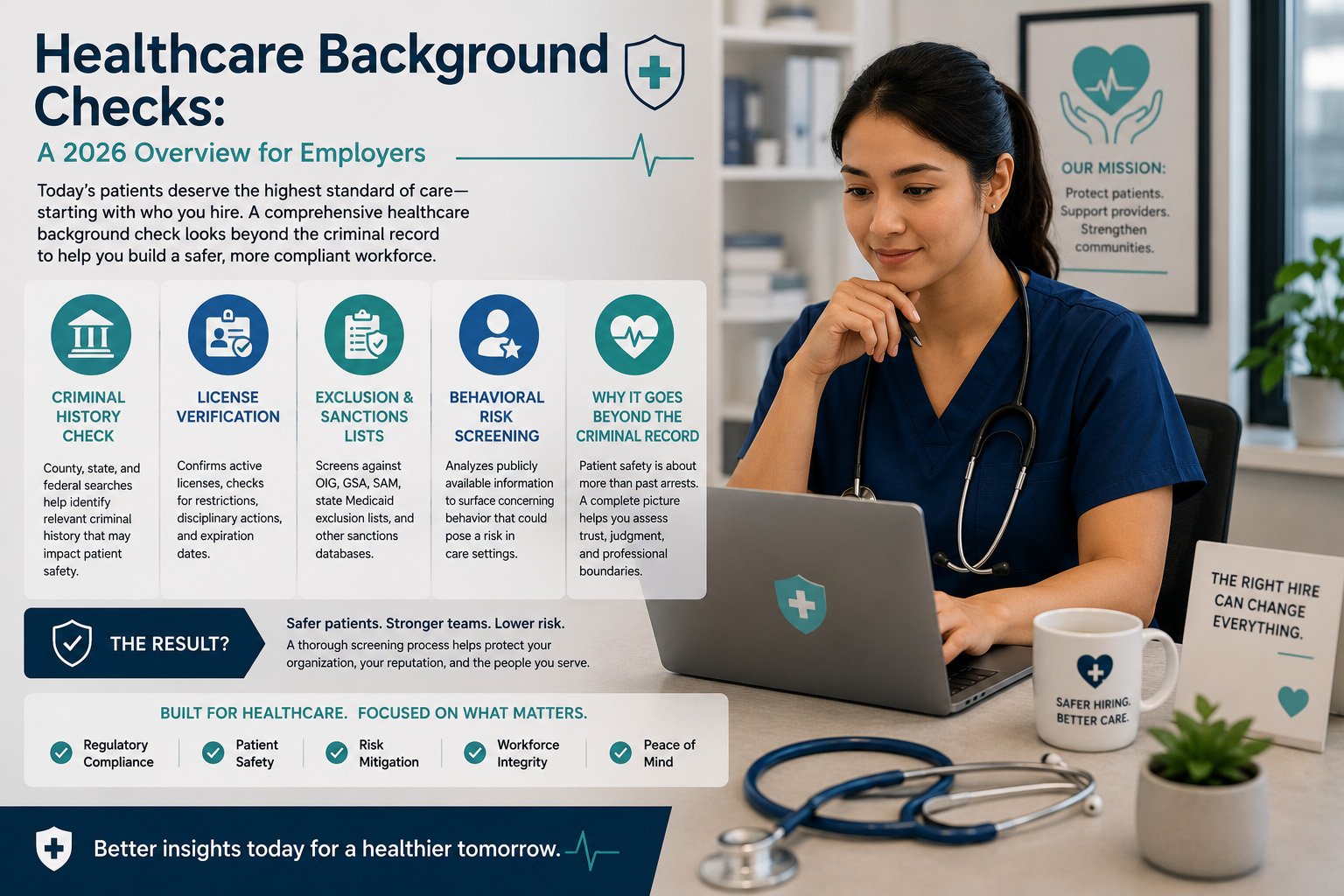
Historically, background checks in the insurance industry largely revolved around the aforementioned binary framework. Whether that be the financial services industry or insurance industry. The generic checks include, validate licensing, verify employment history, confirm there were no criminal charges, and move the candidate forward. This approach built around "pass/fail" logic reflected the regulatory culture of the insurance industry, where compliance meant meeting minimum standards rather than assessing holistic professional character. A prospective employee with no violations was assumed trustworthy for the job.Anyone outside those guidelines were screened out.
But this system ignored the gray areas where large bits of information can slip through the cracks. Today, emerging technology is reshaping this paradigm by offering richer behavioral intelligence beyond simple clearance. Modern platforms can surface signals from digital ecosystems, identify patterns of misconduct complaints, and highlight reputational risk indicators that would previously go undetected. The transition from binary to holistic screening is a testament to security in theInsurance Industry. Had holistic screening been applied at Aflac in 2018, many could have argued that a scandal of that scale would be improbable.
Ferretly: Engineering the Holistic Screening Process
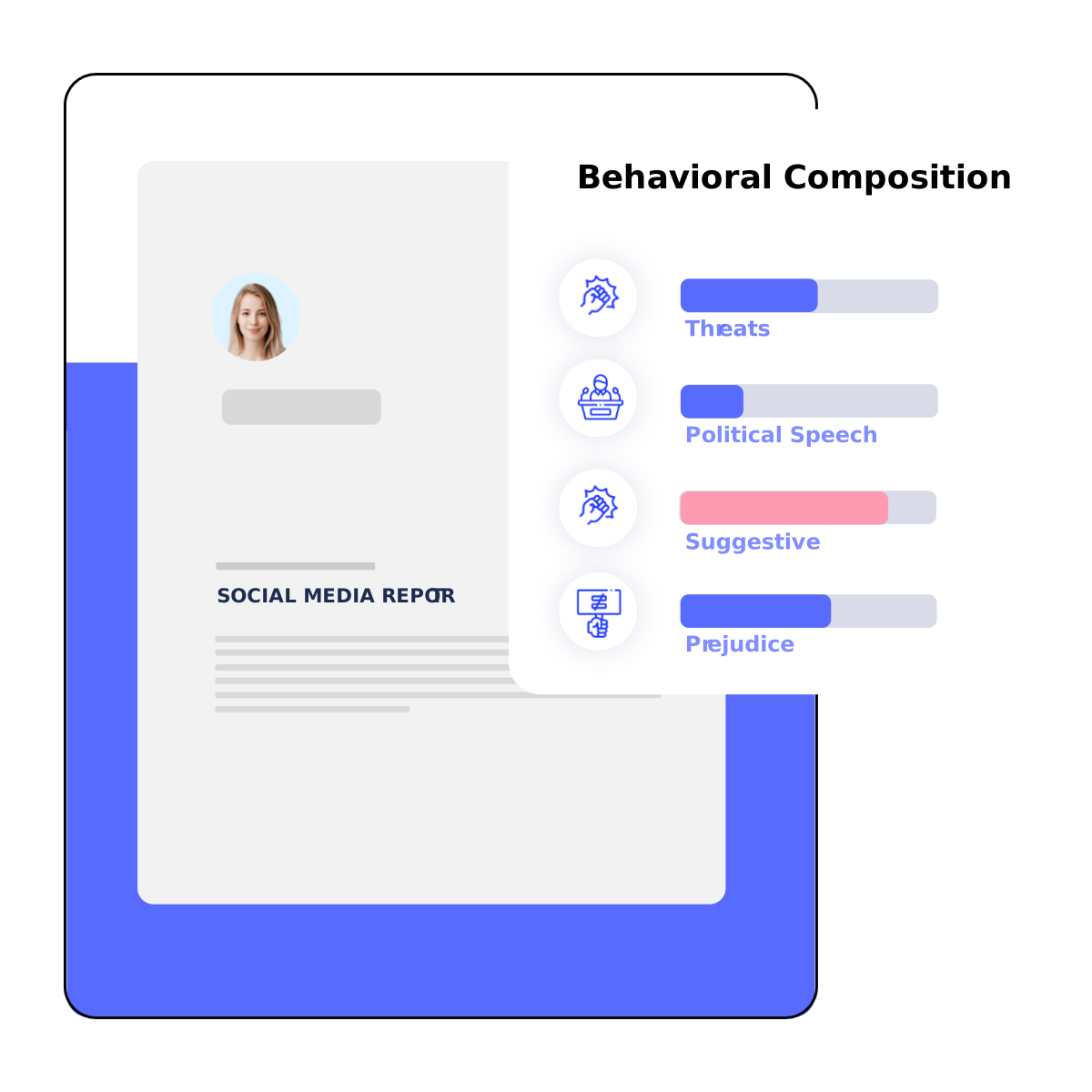
Ferretly, an AI social media background screening company based out of Easton MD, is helping the insurance industry move beyond binary background checks once limited to confirming licenses and clean records toward holistic, behavior-based screening. Its AI-driven BehavioralIntelligence engine analyzes public digital activity to flag patterns of bias, harassment, or fraud that traditional checks miss, while its Profile Discovery tools surface hidden or pseudonymous accounts tied to agents, adjusters, or brokers.
These capabilities are especially valuable in life and annuity distribution, claims operations, and reinsurance, where sensitive customer data, high fiduciary duty, and global intermediary networks demand heightened due-diligence. By supplementing traditional licensing and compliance checks with real-time behavioral insight, Ferretly enables insurers to identify reputational and ethical risks before they escalate, strengthening trust, compliance, and customer protection.
Securing a Delicate Industry
The Insurance Industry in theUnited States is the most subsidized industry by the United States Government or a reason, because the economic and financial stability of 330 million people depend on it. 85% of the capital behind that much financial dependency concentrated between just a dozen insurance companies creates a bit of a systemic agency problem for the individuals who are managing that capital on their behalf.
Humans are not binary objects, nor are their qualities, so the fact that the Aflac incident was mostly a standalone incident can be seen as getting away easy. Platforms like Ferretly are compensated by attacking an unfilled niche, while using data science and math to measure the risk factors of humans that aren't binary measures. In doing so, the dynamic nature of the Insurance Industry can be secured with an even more dynamic screening process.
Public Scrutiny: Who does Holistic Screening Target?
Many critics have put forward an interesting thought regarding automated screening processes, who are these systems inadvertently targeting? In an age of DEI where every hiring initiative is encouraged to be as equitable as possible across numerous demographics, DEI advocates say that current screening has a disproportionate bias againstAfrican American and Hispanic applicants to flag activity based on public records.
Moreover, the InsuranceIndustry is one with historically more diverse hiring records than others with less than 40% of all applicants being caucasian in 2024. In the past, firm shave counteracted this by increasing operational transparency in results and algorithms used to make such critical hiring decisions. By doing so, there are less weak points of contention available for users to argue that the software is biased.
###
About This Article
This piece was developed as part of a University of Maryland writing practicum exploring AI ethics, responsible AI-assisted content creation, and advanced prompting techniques. The course was led by Adam Lloyd, Ph.D., with industry mentorship provided by Ferretly to ground coursework in real-world application and ethical AI use.
Student Author: Shourjo Saha
→ssaha123@terpmail.umd.edu · LinkedIn
Course Faculty & Mentorship
Adam Lloyd, Ph.D. · Lecturer, University of Maryland
Adam teaches business and technical writing with a focus on real-world application—his courses partner with companies to create actual workplace deliverables. He co-created UMD's "Digital Rhetoric at the Dawn ofExtra-Human Discourse," exploring AI's role in academic, creative, and professional writing. A former journalist, startup founder, and award-honored educator, he holds advanced degrees in English, philosophy, and national security studies.
→lloyda@umd.edu · LinkedIn
Nicole Young · VP, Growth Marketing
Nicole provides industry mentorship for this course, bringing deep experience in growth marketing, advertising strategy, and AI-integrated content systems. Her work focuses on building ethical, scalable marketing programs at the intersection of technology, trust, and brand performance. She welcomes collaboration with academic programs seeking practitioner partnerships.
→nicole@ferretly.com · LinkedIn