Brand Values & Marketing: Why Gen Z Buyers Care More About Beliefs Than Products


Why Buying Equals Believing
Consumer buying behavior has changed; "84 percent of young Gen Zers (14-17) say that they buy on beliefs." We no longer just want a good product, but also a good company —a company that shares our same ethics and doesn't platform people or values we reject.
A Case Study in Misalignment
This August, popular makeup company e.l.f. Cosmetics launched a controversial social media campaign featuring comedian Matt Rife. The campaign sparked backlash after its audience pointed out that Matt Rife has made jokes about domestic violence. Thankfully, e.l.f. listened to their audience and responded on Instagram, apologizing for their lack of foresight and pledging to stop the campaign. Matt Rife's previous actions on social media completely contrast with e.l.f.'s values, as they describe themselves as "supporting individual expression, empowerment, and human rights."
The Person Behind the Brand Matters
For Gen Z, the influencer represents the brand – when that person's behavior contradicts a company's values, trust breaks quickly.
The Stakes Are Higher Than Ever
In this new age of marketing, influencer choice is now tied to brand reputation, customer loyalty, and even financial performance. Brands and agencies select influencers who align with their morals and their audience's values, so when a company like e.l.f.partners with someone who doesn't fit their brand's ideals — or even contradicts them — it can cause serious consequences.
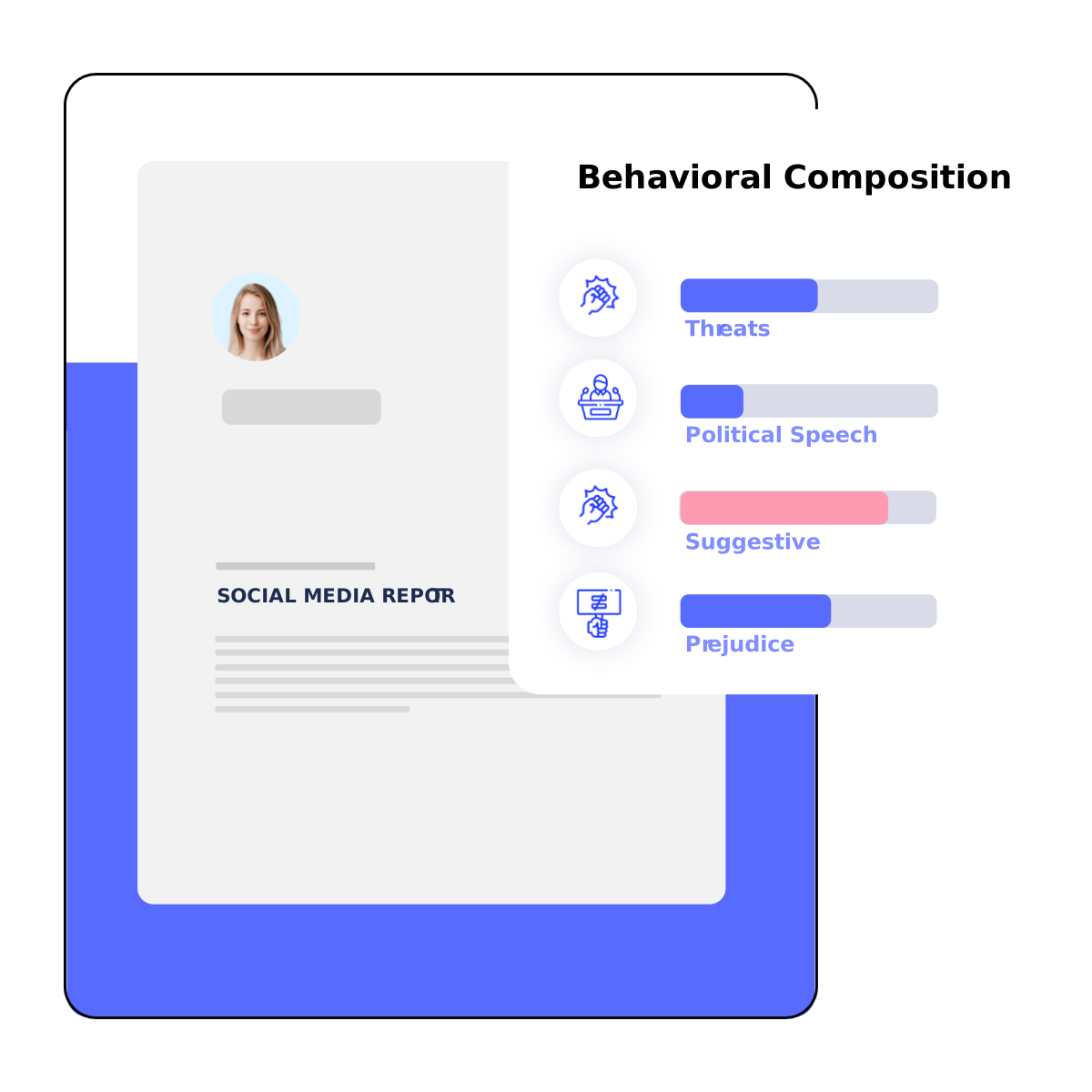
Because influencer choice directly affects brand reputation and financial performance, brands and agencies need behavioral-risk tools like Ferretly to surface red flags — long before misalignment snowballs into public backlash.
How Gen Z Holds Brands Accountable
In such a divided landscape, Gen Z values companies that put their resources toward good, including donating to causes that align with their beliefs. When companies align themselves with a controversial influencer, the backlash doesn't just stay online; it snowballs into brand distrust, boycotts, and cancel culture. Consequently, it harms the brand's financials; for example, after the e.l.f. cosmetics campaign launched, backlash led to a 2.7% drop in e.l.f.'s share price, and the trading volume forELF stock fell 22.5% that same day.
From Good Intentions to Strategic Risk Management
Influencer vetting is essential; brands shouldn't wait until an influencer representing them gets exposed on Twitter. Influencer vetting shouldn't be optional; it's risk management. When Gen Z buys a product, they aren't just buying an item; they're supporting a brand and its values. This is especially relevant in industries built on ethical branding, such as beauty and wellness, where consumers don't just want an effective product, but a sustainably sourced and ethically made one.
A Gen Z-er's Perspective
It's difficult to overlook brands that don't do their basic research. As a member of Gen Z myself, I like to stray away from brands that promote people whose beliefs I don't align with.Not just because I want to align morally with a brand, but because, as an individual in marketing, I know that a social media campaign is a team effort and has to go through many levels of approval before it sees the public. If none of those layers of approval see anything wrong with the person representing them, I'm inclined to believe that the company holds those same values.
Ready To Protect Your Brand?
If you want to avoid the next brand-damaging controversy, book a demo with Ferretly.
###
About This Article
This piece was developed as part of a University of Maryland writing practicum exploring AI ethics, responsible AI-assisted content creation, and advanced prompting techniques. The course was led by Adam Lloyd, Ph.D., with industry mentorship provided by Ferretly to ground coursework in real-world application and ethical AI use.
Student Author: Gabi Admi
→gadmi@terpmail.umd.edu · LinkedIn
Course Faculty & Mentorship
Adam Lloyd, Ph.D. · Lecturer, University of Maryland
Adam teaches business and technical writing with a focus on real-world application—his courses partner with companies to create actual workplace deliverables. He co-created UMD's "Digital Rhetoric at the Dawn ofExtra-Human Discourse," exploring AI's role in academic, creative, and professional writing. A former journalist, startup founder, and award-honored educator, he holds advanced degrees in English, philosophy, and national security studies.
→lloyda@umd.edu · LinkedIn
Nicole Young · VP, Growth Marketing
Nicole provides industry mentorship for this course, bringing deep experience in growth marketing, advertising strategy, and AI-integrated content systems. Her work focuses on building ethical, scalable marketing programs at the intersection of technology, trust, and brand performance. She welcomes collaboration with academic programs seeking practitioner partnerships.
→nicole@ferretly.com · LinkedIn