HR Social Media Checks: Best Practices Guide


Social Media Checks for Employment: Best Practices for Human Resource Teams
You've got a promising candidate, and the temptation is real. You open a new tab, type their name into a search bar, and take a quick peek at their social media. This common impulse, however, can expose your company to serious legal risks and accusations of bias.
The biggest danger isn't just what you might find, but what you see by accident. A quick scroll can reveal personal information that has nothing to do with the job but can color your perception. According to employment law experts, seeing details about a candidate's protected class—such as age, religion, family status, or health conditions—can create an unconscious bias that is difficult to ignore and even harder to defend in a legal claim.
Inconsistency is another legal landmine. If you only check the profiles of certain candidates, an unsuccessful applicant could argue they were singled out unfairly. To get these insights the right way, you must replace the informal peek with a formal, consistent process. This guide provides a step-by-step framework to conduct social media checks that are effective, fair, and help you make a more confident hiring decision.
Step 1: Create Your 'Rules of Engagement' with a Clear Screening Policy
Instead of randomly searching, your first step is to create a written social media screening policy. This document acts as your guide, defining what you will look for ahead of time. The core principle is focusing strictly on job-related criteria—behaviors that directly impact a person's ability to perform the job, such as public displays of aggression or sharing confidential information. It's not about judging their personal life; it's about assessing professional risk.
This written policy becomes your best defense. It demonstrates that your search was targeted and fair, not an invasive fishing expedition. Your guide should explicitly state that you will disregard any information related to protected characteristics, as well as personal lifestyle choices.
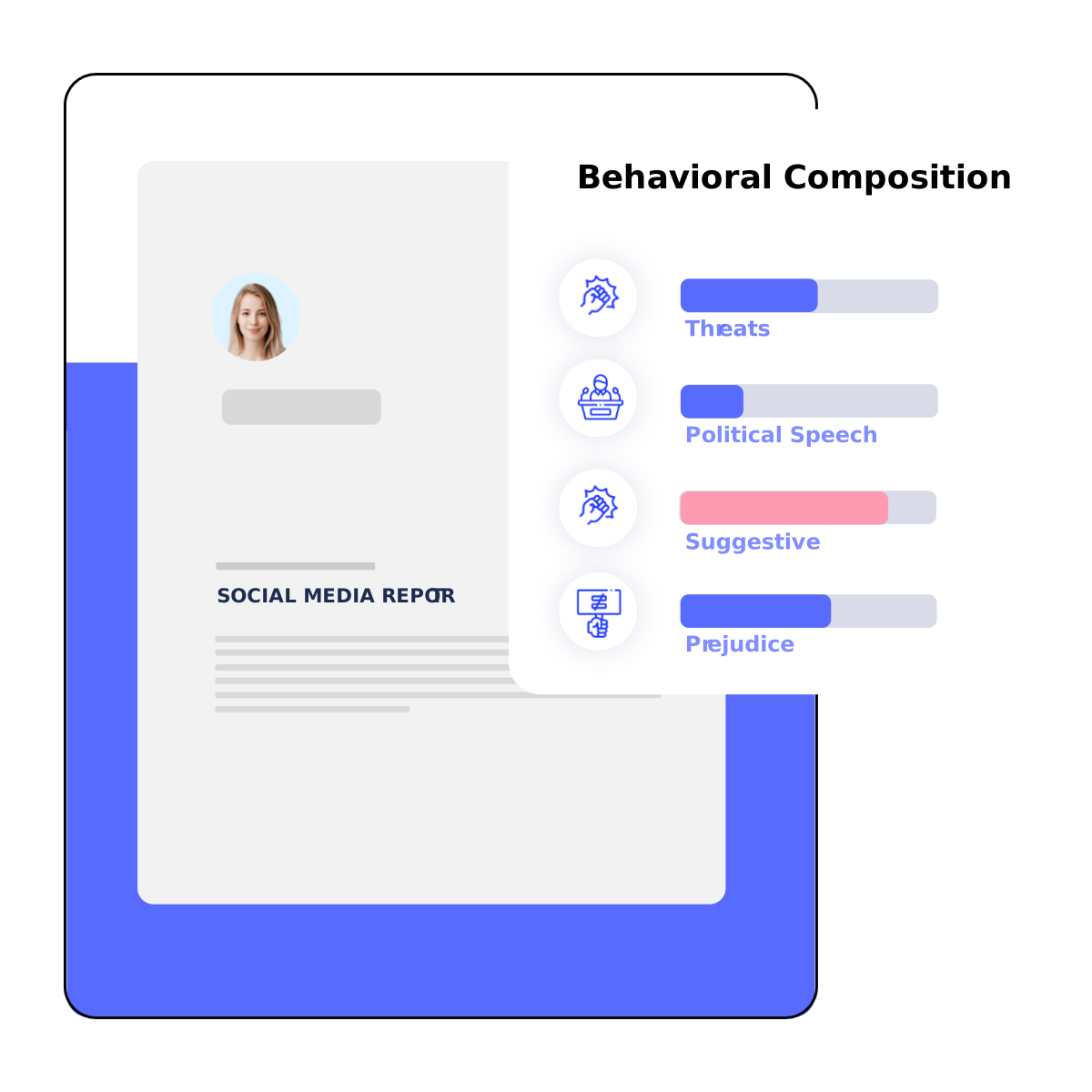
The challenge? Even with a clear policy, human screeners can't un-see what they've already seen. A profile photo revealing a candidate's age, a post about a religious holiday, or a family update can introduce unconscious bias before a screener even realizes it. This is where AI-powered screening tools offer a distinct advantage—they can be programmed to flag only job-related content while filtering out protected information entirely, ensuring your policy is applied consistently every time.
Step 2: Ensure Fairness with Consistent Timing and a 'Clean Screen'
With your policy in hand, the next step is deciding when to screen. The best time to conduct a social media check is late in the hiring process, such as after the interview stage when you have a small pool of finalists. Screening everyone at the start is a huge time sink and exposes you to bias-inducing information before you've even met them. For a consistent process, the rule is simple: apply the same search, at the same time, for every finalist for a role—or screen none at all.
The traditional "Clean Screen" method calls for a neutral colleague to conduct the search and report only job-related findings. But this approach has limitations: it relies on that colleague's subjective judgment, takes time away from their primary responsibilities, and still requires a human to view protected information—even if they don't report it.
A more scalable solution: Third-party screening services that use AI to analyze social media content can act as that neutral firewall automatically. These platforms deliver standardized reports focused exclusively on business-relevant risk factors, ensuring every candidate is evaluated against the same objective criteria. This removes the burden from your internal team while creating a defensible, consistent process.
Step 3: Identify the Red Flags That Actually Matter for Business
A social media check is not an excuse to judge a candidate's personal life, political views, or vacation choices. The goal is to perform a digital footprint analysis focused exclusively on legitimate, job-related business risks. Whether conducted internally or through a third-party service, your screening should only flag clear evidence of:
- Violent, Discriminatory, or Harassing Content: Posts, shares, or comments that demonstrate hate speech, threats, or bigotry directed at any group.
- Potentially Illegal Activity: Photos or statements depicting drug use, theft, or other behavior that could impact job performance or company reputation.
- Sexually Explicit Content: Publicly shared material that may be inappropriate in a professional context.
- Disclosure of Confidential Information: Sharing trade secrets, private client data, or non-public information from a previous or current employer.
AI-powered screening tools excel here because they're trained to identify these specific categories at scale—analyzing years of content across multiple platforms in minutes rather than hours, and doing so without fatigue or subjective drift that can affect human reviewers over time.
Step 4: Document Findings and Decide with Care
If you spot a red flag, your next step is to create a factual, objective record. Note the date, the URL, and a direct quote or screenshot of the specific content. Document only the evidence itself, not your opinions or assumptions about it. This creates a clean, defensible record focused purely on the job-related risk identified.
Important compliance note: If you use a third-party service to conduct these searches, the process is treated like a formal background check. Under the Fair Credit Reporting Act (FCRA), you must notify the candidate and get their written consent beforehand. Reputable screening providers will guide you through this process and provide FCRA-compliant workflows, adverse action letter templates, and audit-ready documentation—protections you won't have if you're conducting informal internal searches.
Most critically, never make a final rejection decision based solely on social media findings without proper review. Professional screening services typically provide context and severity indicators to help you assess findings appropriately, but consulting legal counsel on borderline cases remains a best practice.
Your Action Plan for Confident Social Media Screening
What once felt like a risky peek into a candidate's life can now be a professional, structured step in your hiring process. Whether you build an internal program or partner with a screening provider, the fundamentals remain the same:
- Create a clear, written policy focused on job-related criteria.
- Be consistent in timing and application across all candidates.
- Use a clean screen approach—whether through a neutral colleague or an AI-powered service that filters protected information automatically.
- Focus only on business-relevant red flags that impact professional risk.
- Document factually and maintain FCRA compliance if using third-party services.
For many organizations, partnering with a professional social media screening service offers the most reliable path to consistency, compliance, and defensibility. These tools don't replace human judgment—they enhance it by ensuring hiring managers receive only the information that's relevant to making a fair, informed decision.
This process isn't about snooping; it's about making smarter hiring decisions while protecting both your candidates and your company.