Enterprise Financial Services: Screen for Compliance


For years, compliance in financial services has been treated like a simple checklist. You would have to follow the rules, pass the audit, and move on. But the financial world is starting to see that compliance is about more than just following the given regulations. It's about understanding people, behavior, and reputation before small issues turn into bigger problems. Unfortunately, many large companies have overlooked critical warning signs during background checks, leading to serious consequences. In today's fast-moving industry, protecting trust is just as important as passing the test.
The Limits of the Checklist
Traditional compliance frameworks rely on rigid structures: pass/fail, flagged/cleared. These systems focus on what's visible and immediate, not on what's developing beneath the surface. A flagged transaction is investigated, a clean background is approved, and that is the end of the story. But actual risks don't always show up on these tests. A client who checks every regulatory box can still pose ethical or reputational challenges that no form will capture. Meanwhile, a professional flagged for a one-time issue years ago may pose no real risk today.
This gap was made clear in a scandal regarding Wells Fargo, where employees passed all compliance checks while underlying behavioral issues. These behavioral issues included extremes ales pressure, unethical tactics, and rising internal complaints. Furthermore, this went unnoticed until millions of fake accounts had already been created.This resulted in the bank losing an estimated 3 billion dollars. Binary compliance misses both realities and in doing so, creates blind spots that can cost firms money, credibility, and trust.
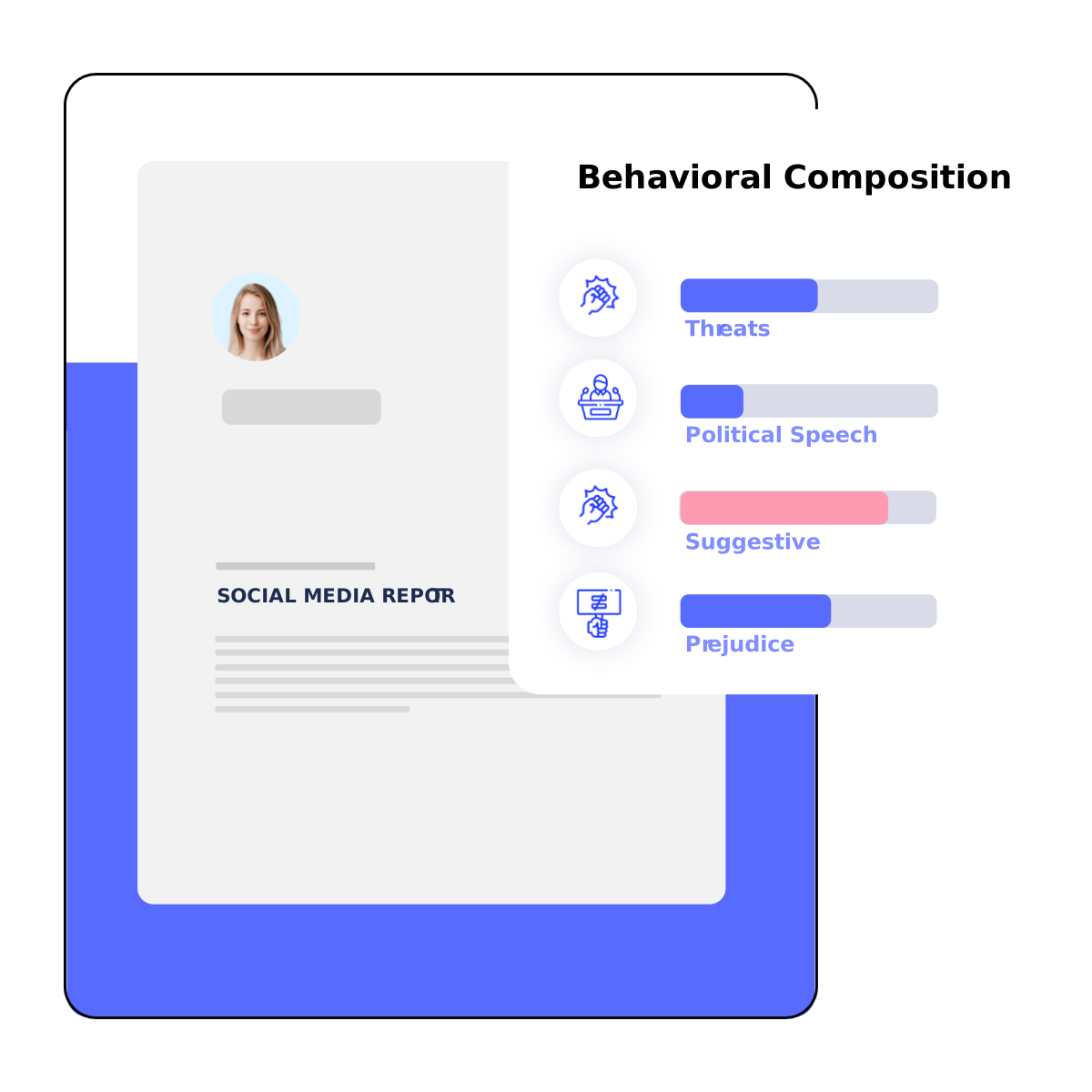
Tools like Ferretly help fill this gap by going beyond simple checklists, using AI to analyze behavioral patterns and online activity so firms can uncover risks that traditional systems overlook and avoid relying solely on black-and-white categories.
Context Over Category
Modern financial oversight requires context, not just compliance. The goal is no longer simply to determine if a rule was broken, but to understand what happened and if it is possible that this occurs again. Everyone has a past, some are proud of theirs and others are not. While pasts should be pointed out, they should not be a make or break. The company should look deeper into it and even question the potential employee to understand what, if anything, had happened.
Data-driven analytics now allow firms to identify behavioral trajectories:
• Has there been suspicious activities isolated or recurring?
• Do recent patterns indicate improvement or escalation?
• How does each risk align with the individual's role, exposure, or authority?
When compliance becomes contextual, institutions move from reacting to rules toward understanding patterns that truly impact organizational integrity.
From Detection to Anticipation
The future of compliance lies in anticipation. Financial institutions can now recognize signals that point toward potential misconduct before violations occur. This shift goes beyond just checking boxes. It means looking more closely at a person's past and current behavior to see if there could be risks for the future. This change isn't just about new technology, it's about how people think. It moves from HR making decisions by checking off boxes to using evidence and patterns in order to make the best decisions.
Tools like Ferretly support this proactive approach by using AI to detect behavioral patterns and reputational risks early in the process. Instead of relying solely on behavioral signals after the fact, these systems help organizations identify subtle warning signs. This allows compliance teams to make educated decisions before problems escalate.
Building Intelligent Compliance
Intelligent compliance systems don't replace human judgment, they improve it.
They combine:
• Behavioral insight: Spotting patterns in behavior that could point to future risks.
• Balanced judgment: Looking at how serious each issue is instead of treating everything the same.
• Clear reasoning: Making sure every decision can be explained and understood.
• Ongoing learning: Improving the process over time as more data and experience come in.
Platforms like Ferretly are helping organizations take this next step. By using AI to analyze behavioral data, Ferretly allows compliance teams to make decisions based on the big picture, not just isolated incidents. The technology is there to help people make better decisions, not take their place. It makes the review process quicker and more fair while keeping human judgment at the center.
The Future of Financial Oversight
In conclusion, the way companies approach compliance is changing. It's moving from simple yes-or-no decisions to a deeper understanding of context and behavior. Firms that adjust to this new approach won't just avoid fines, they'll also build an advantage within the workplace. By seeing how actions today can affect future risk, they can protect both their reputation and their relationships. In today's financial world, compliance is no longer just about following the rules. It's about creating systems and cultures that look ahead and make smarter choices.
###
About This Article
This piece was developed as part of a University of Maryland writing practicum exploring AI ethics, responsible AI-assisted content creation, and advanced prompting techniques. The course was led by Adam Lloyd, Ph.D., with industry mentorship provided by Ferretly to ground coursework in real-world application and ethical AI use.
Student Author: Jack Defranco
→jdefranc@terpmail.umd.edu · LinkedIn
Course Faculty & Mentorship
Adam Lloyd, Ph.D. · Lecturer, University of Maryland
Adam teaches business and technical writing with a focus on real-world application—his courses partner with companies to create actual workplace deliverables. He co-created UMD's "Digital Rhetoric at the Dawn ofExtra-Human Discourse," exploring AI's role in academic, creative, and professional writing. A former journalist, startup founder, and award-honored educator, he holds advanced degrees in English, philosophy, and national security studies.
→lloyda@umd.edu · LinkedIn
Nicole Young · VP, Growth Marketing
Nicole provides industry mentorship for this course, bringing deep experience in growth marketing, advertising strategy, and AI-integrated content systems. Her work focuses on building ethical, scalable marketing programs at the intersection of technology, trust, and brand performance. She welcomes collaboration with academic programs seeking practitioner partnerships.
→nicole@ferretly.com · LinkedIn