The Compliance Playbook
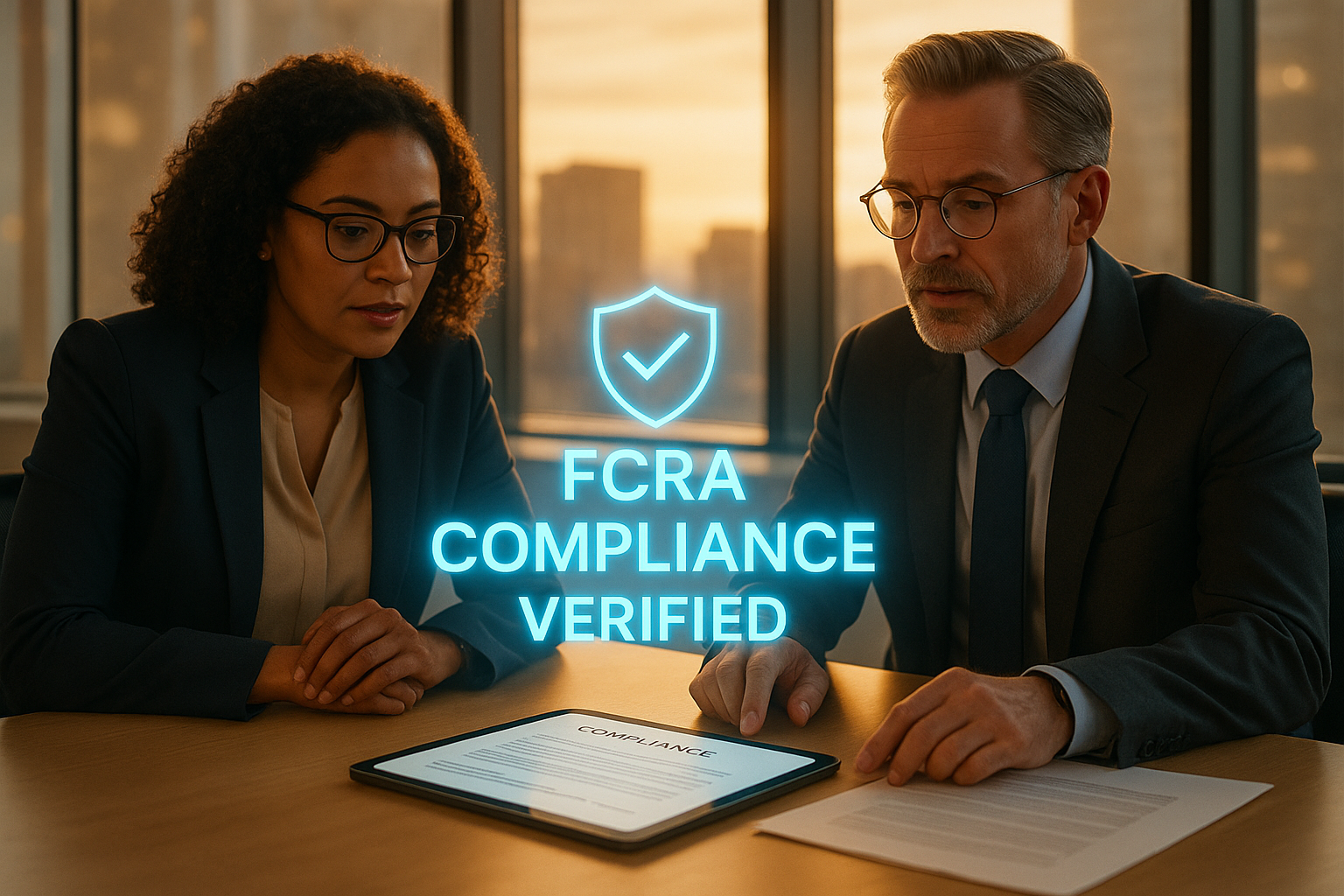

How to Run a Legally Defensible Social Media Screening Process in 2026
Introduction: The Compliance Blindspot No One Wants to Talk About
HR teams today are required to navigate one of the trickiest contradictions in modern hiring:
They must not consider protected-class information. But they’re expected to avoid negligent hiring. And the problem is: almost all protected-class information lives publicly in plain sight.
Religion.
Age.
Gender identity.
Disability.
Pregnancy.
Political views.
Health conditions.
Family status.
If an employer goes digging manually, they will immediately see information they are not allowed to use in hiring decisions.
Worse—even if they don’t use it, candidates and regulators have no way of knowing that. That is the central legal trap of 2026.
This guide lays out exactly how to build a legally defensible, compliant, transparent, and ethical approach to public digital behavior screening without tripping into discrimination claims, privacy violations, or bias exposure.
1. The New Compliance Landscape HR Must Operate In
Modern hiring isn’t just about evaluating qualifications. It’s about minimizing legal exposure while preserving fairness, privacy, and workplace safety.
The compliance forces shaping public digital behavior screening in 2026 include:
- FCRA (Fair Credit Reporting Act)
- EEOC (Equal Employment Opportunity Commission)
- State privacy, password, and social media access laws
- General anti-discrimination and labor laws
- Internal company governance standards
- Increasing candidate awareness and consumer-safety expectations
Why this matters now more than ever
Public online behavior has become one of the most relevant predictors of:
- workplace hostility
- reputational risk
- customer-facing incidents
- regulatory exposure
- harassment potential
- safety concerns
…but it’s also the #1 source of protected-class information.
This means the very place employers need visibility is also the place where they face the highest legal risk.
2. Why DIY Screening Is a Compliance Disaster Waiting to Happen
Many HR teams still rely on informal online searches, believing:
- “It’s public, so we’re allowed to look.”
- “We’ll just ignore the protected-class info.”
- “It’s harmless if we don’t document anything.”
- “We won’t tell the candidate, so it’s fine.”
Every single one of these assumptions is wrong and dangerously out of date.
The Four Legal Dangers of DIY Screening
1. Exposure to protected characteristics
A single scroll reveals information HR cannot legally consider.
This includes:
- disability status
- pregnancy
- age
- race
- religion
- marital status
- sexual orientation
Even if employers don’t intend to weigh it…
They can’t prove they didn’t.
2. No FCRA compliance
If a company gathers online information and uses it in a hiring decision, that is an FCRA-covered background check.
Meaning the employer must:
- notify the candidate
- get consent
- provide pre-adverse action
- allow disputes
- provide adverse action notices
DIY screening rarely follows any of this.
3. No identity verification
HR teams regularly misattribute posts to the wrong person, because:
- usernames don’t match legal names
- nicknames are common
- avatars hide identity
- candidates share names with thousands of people
Misattribution is one of the most common triggers of disputes.
4. Zero consistency across candidates
Some candidates are Googled deeply.
Some barely at all.
Some have large online footprints.
Some have none.
This inconsistency opens the door to discrimination and bias claims.
3. What a Legally Defensible Process Looks Like in 2026
A compliant, ethical social media screening program must follow four pillars of defensibility:
Pillar 1: Identity Accuracy
Only analyze accounts that can be:
- confidently matched
- consistently verified
- tied to the actual candidate
This requires:
- multiple identifiers
- analyst verification
- false-positive elimination
- cross-platform confirmation
Identity accuracy is the backbone of defensibility.
Pillar 2: Job-Relevant Behavioral Categories
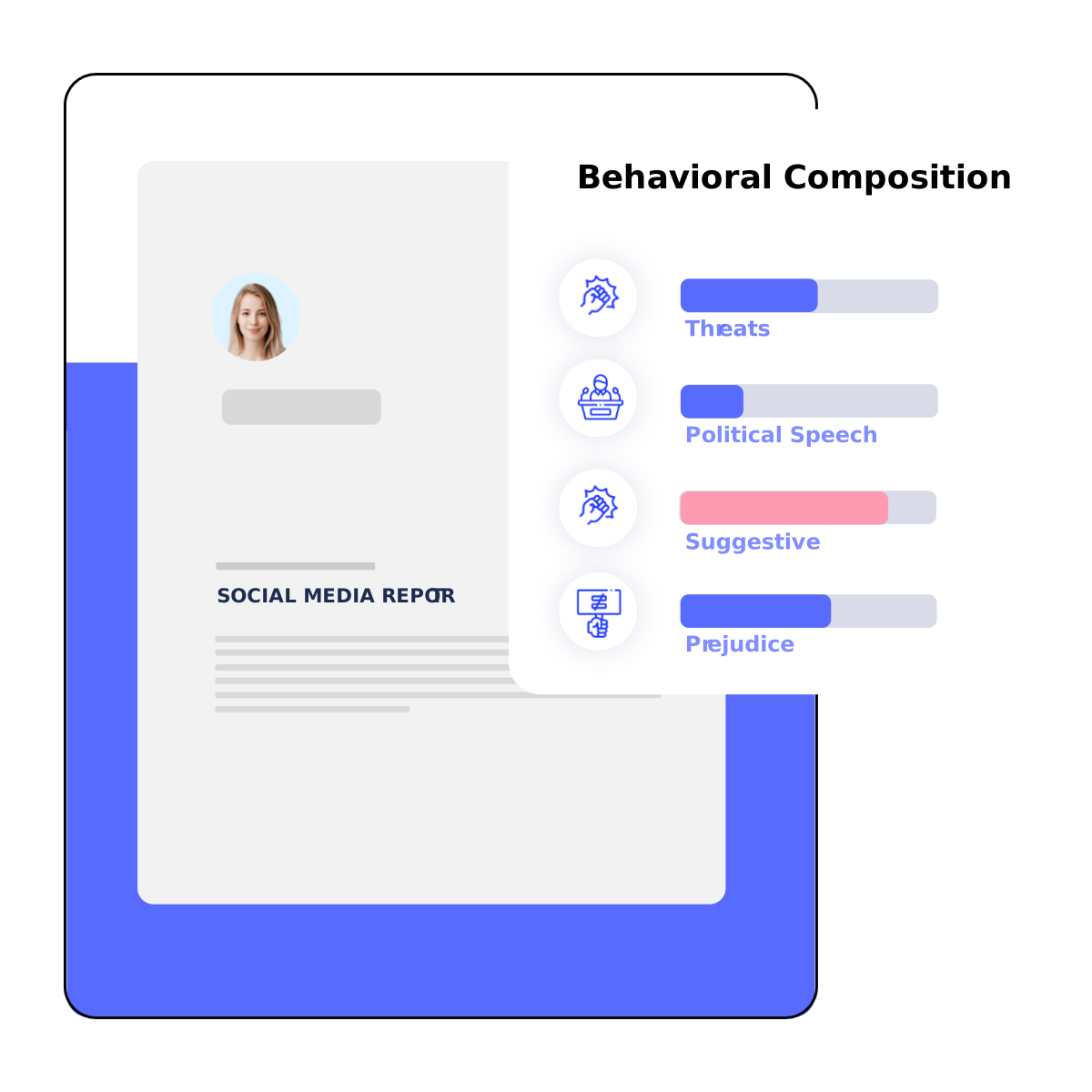
Compliance requires limiting analysis to behavior tied to workplace risk, including:
- violent threats
- harassment
- explicit or sexual misconduct
- discriminatory acts
- illegal activity
- workplace hostility
- doxxing or targeted aggression
These categories must be:
- clearly defined
- consistently applied
- free from political or personal opinion
- free from protected-class inference
The process cannot include:
- lifestyle choices
- political affiliations
- protected speech
- personal identity
- personal beliefs
- hobbies or non-relevant conduct
Pillar 3: Analyst Review + Context
AI is powerful, but it cannot be the sole decision-maker.
Human review is essential for:
- verifying accuracy
- correcting misinterpretations
- ensuring fairness
- reading nuance
- eliminating false flags
This hybrid model is the only legally defensible approach as of 2026.
Pillar 4 — Clean FCRA-Compliant Delivery (Without Overreach)
A compliant screening process must:
- obtain candidate consent
- review only public content
- separate protected-class information from risk review
- provide accurate reporting
- avoid editorial judgments
- ensure transparency
- allow disputes
This ensures employers can make decisions safely, ethically, and consistently.
4. What Employers Should Not Do in 2026
A compliant process avoids:
- requesting passwords
- viewing private accounts
- using personal identifiers to circumvent privacy settings
- scraping non-public data
- interpreting artistic, political, or creative expression
- capturing protected-class details
- incorporating AI-inferred traits
Employers must never analyze:
- personality predictions
- political ideology
- mental health assumptions
- lifestyle criticism
- cultural preferences
- protected speech
These are not just irrelevant — they are legally radioactive.
5. How to Implement a Compliant Program Without Overcomplicating HR Workflows
The most effective programs are:
- simple
- consistent
- explainable
- automated where appropriate
- documented
- fair
Phase 1: Decide your risk categories
Only include categories tied to workplace relevance.
Phase 2: Standardize your process
Make sure every candidate for a given role level undergoes the same type of screening.
Phase 3: Train your HR team
They must know:
- what they will see
- what they must not consider
- what decisions are allowed
- what requires legal review
Phase 4: Document your compliance posture
This is your shield in any dispute.
Phase 5: Communicate transparently with candidates
Transparency increases trust — and reduces disputes.
6. The Bottom Line: Compliance Is No Longer a Burden—It’s a Brand Advantage
In 2026, compliance isn’t an obstacle. It’s a differentiator.
Candidates trust employers who use:
- objective methods
- fair evaluations
- privacy-respecting processes
- context-aware analysis
- consistent standards
And regulators look favorably on systems that:
- don’t overreach
- don’t invade privacy
- don’t expose protected information
- don’t rely on bias-prone manual searches
The companies that succeed in this new hiring landscape are the ones that understand:
Compliance isn’t red tape.
It’s reputation protection.
You can’t afford DIY.
You can’t afford inconsistency.
You can’t afford exposure to protected-class information.
You need a process that’s modern, fair, accurate, and defensible.
That’s the compliance playbook for 2026.